The honest Kilimanjaro fitness requirements for Africa’s highest peak
To summit Kilimanjaro (5,895m / 19,341ft) successfully, you need to walk uphill 6–8 hours a day with a 6–8 kg daypack for 6–8 consecutive days, finishing with a 14–18 hour summit day at altitude. You do not need to be an athlete. You do need 12–16 weeks of consistent training and the right route choice.
Why Kilimanjaro Fitness Is Different from Regular Fitness
Plenty of marathon runners fail to summit. Plenty of CrossFit athletes turn back at Stella Point (5,756m / 18,885ft). Pure cardiovascular fitness is necessary but not sufficient.
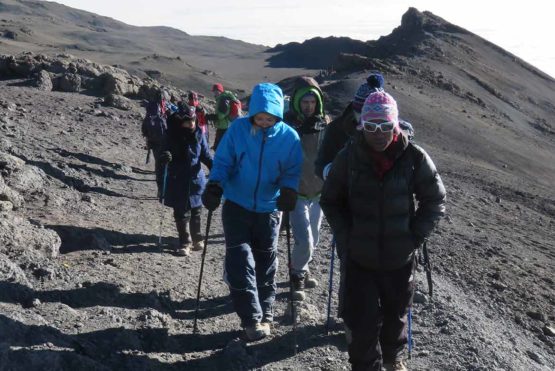
Sustained low-intensity effort over many hours, not bursts. Summit night alone runs 6–8 hours of slow uphill walking in extreme cold, followed by 4–6 hours of descent. The endurance you need comes from long, slow efforts not interval training.
Carrying weight on uneven terrain. Even with a porter, you carry a 6–8 kg daypack every day. Your shoulders, hips, and lower back need conditioning to carry weight all day across rocky, varied terrain.
Reduced oxygen at altitude. At Uhuru Peak (5,895m / 19,341ft), there is roughly 50% of the oxygen available at sea level. The fitter your cardiovascular system, the better it copes with altitude stress.
The descent destroys most climbers’ legs. After the summit, you descend nearly 4,000m / 13,123ft over two days. Eccentric loading on your quads and knees is brutal. Most climbers severely underestimate this.

Kilimanjaro Success Rates by Route
Training matters but route choice matters just as much. Longer routes give your body more time to acclimatize, dramatically improving your summit odds.
| Route | Duration | Summit Success Rate | Best For |
|---|---|---|---|
| Marangu Route | 5–6 days | 55–60% | Budget climbers (lowest success) |
| Machame Route | 6–7 days | 65–70% | Intermediate hikers |
| Lemosho Route | 8 days | 70–75% | First-timers RECOMMENDED |
| Northern Circuit | 9-10 days | 80%+ | Best acclimatisation, highest success |
All Himalayan Glacier Kilimanjaro routes are designed with a focus on gradual ascent and proper acclimatization, resulting in consistently high summit success rates across every itinerary.
Explore our Kilimanjaro routes below:
- Kilimanjaro Climbing via Lemosho Route – 8 Days
- Kilimanjaro Climbing Tours via Northern Circuit – 10 Days
- Kilimanjaro Climb via Rongai Route – 8 Days
- Kilimanjaro Classic Climb via Marangu route – 8 Days
- Kilimanjaro Climb via Machame route – 8 Days
- Kilimanjaro Climb via Umbwe Route – 8 Days
What Summit Night Actually Demands of Your Body
To train effectively, you need to know what you are training for. Summit night at Kilimanjaro looks like this:
- Wake-up at 11pm or midnight. You have already trekked 4–6 days. Eat a small meal in the cold.
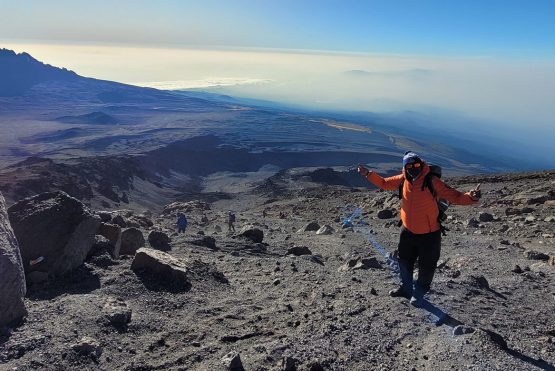
- Begin climbing in darkness. Temperatures of −10°C to −20°C (14°F to −4°F), dropping further near the crater rim at 5,756m / 18,885ft.
- Climb 1,200m / 3,937ft over 5–7 hours. From Kosovo Camp or Barafu (4,700–4,900m / 15,420–16,076ft) to Uhuru Peak (5,895m / 19,341ft). Around 200m / 656ft of vertical ascent per hour.
- Reach Stella Point (5,756m / 18,885ft) at sunrise. Then 45–90 minutes of walking along the crater rim to Uhuru Peak where most people who turn back, turn back.
- Brief celebration at the summit (5,895m / 19,341ft). Photos take 10–15 minutes. You cannot stay long because of the altitude.
- Descend to high camp in 2–3 hours. Steep descent on loose scree, hard on knees and quads. Then rest for an hour or two.
- Continue down to the next camp in another 4–5 hours. Total day: 14–18 hours of effort with very little rest.
Key Training Insight: You are not training for one hard day. You are training to do a hard 14–18 hour day at the END of a week of progressively harder days. Back-to-back long hikes on consecutive weekend days are the single best training modality. Your body learns to work tired.
The 4 Pillars of Kilimanjaro Training
Every effective Kilimanjaro fitness training plan rests on four core pillars. Miss any one and your summit odds drop.
Pillar 1: Hiking with a Weighted Pack
This is the single most important thing you can do. Build from 2-hour hikes with a 5 kg pack to 8-hour hikes with 12–15 kg. Walk uphill whenever possible and downhill on the same hikes. By week 14, you should be able to do a 6-hour hike with a 12 kg pack, recover overnight, and do another 4–5 hour hike the next day.
Pillar 2: Cardiovascular Endurance
On non-hiking days, build a strong aerobic base. Running, cycling, swimming, rowing, and stair climbing all work. Train mostly in heart rate Zone 2 (60–70% of max heart rate, conversational pace). Add one harder interval session per week.
Pillar 3: Lower Body and Core Strength
Two strength sessions per week is enough. Focus on legs (squats, lunges, step-ups, calf raises), core (planks, dead bugs, bird dogs), and posterior chain (deadlifts, glute bridges). Use moderate weight and higher reps, you are training for endurance, not powerlifting.
Pillar 4: Mental and Logistical Preparation
Train your mind by doing long, uncomfortable workouts on bad weather days. Break in your boots for at least 50 km before you fly. Test every piece of gear. The fewer surprises on the mountain, the more focus you can give the climb.
Your Starting Point: The Kilimanjaro Fitness Baseline Test
Before you start training, do this test. Find a hill or stairs that climbs roughly 100m / 328ft of elevation. Carry a 5 kg pack. Climb it as fast as you comfortably can without stopping. Record the time.
| Time to climb 100m / 328ft vertical with 5 kg pack | Fitness Level | Recommended Approach |
|---|---|---|
| Under 12 minutes | Strong baseline | Start at Week 1, scale up faster |
| 12–18 minutes | Average baseline | Start at Week 1 as written |
| 18–25 minutes | Below average | Add 4 weeks of base building first |
| Over 25 min or unable to complete | Low baseline | Add 8 weeks; see your doctor first |
If you cannot find a hill, do the test on a stair climber set to maximum incline. If you are over 60 or have any cardiac history, see your doctor before beginning any new training programme.

Frequently Asked Questions About Kilimanjaro Fitness
You need to walk uphill for 6–8 hours a day, with a 6–8 kg pack, for 6–8 consecutive days, finishing with a 14–18 hour summit day at altitude (up to 5,895m / 19,341ft). You do not need to be an athlete, but you do need to train consistently for 3–4 months.
Yes, with proper training. The mountain is non-technical: no climbing skills, ropes, or special equipment are required. What matters is committing to a training plan, choosing a longer route (8–9 days), and following your guide’s advice on pacing. Many first-time trekkers summit every year.
16 weeks is ideal. If you are already very fit, 12 weeks can work. If you are starting from a low base or are over 60, give yourself 20–24 weeks. Training too little is the single biggest reason climbers fail to summit.
No. Running builds cardio but not the specific leg conditioning needed for hours of weighted uphill walking especially the descent. Marathon runners regularly fail to summit. Combine cardio with weighted hiking, strength training, and real elevation where possible.
The 8-day Lemosho Route. It offers a long gradual approach through rainforest, an excellent acclimatisation profile, 70–75% summit success, and is less crowded than Machame. The 9-day Northern Circuit has even higher success rates (80%+) but is longer and pricier.
No. Climbers from 12 to 80+ have summited Kilimanjaro. What matters is fitness, training consistency, and acclimatization, not athletic credentials. Average, healthy adults who train properly have an excellent chance of standing on Uhuru Peak (5,895m / 19,341ft).
Choosing the shortest, cheapest route without being adequately prepared. A 6-day Marangu route can mean a 10–15 percentage point lower chance of summiting. The second biggest mistake: undertraining the descent. Up is mentally hard, down is what destroys legs.
Ready to Summit Africa’s Highest Peak?
Your Kilimanjaro summit starts with the right plan, not just the right fitness. Our expedition specialists match your fitness level to the perfect route and build a training timeline that fits your real life so you reach Uhuru Peak (5,895m / 19,341ft) strong.