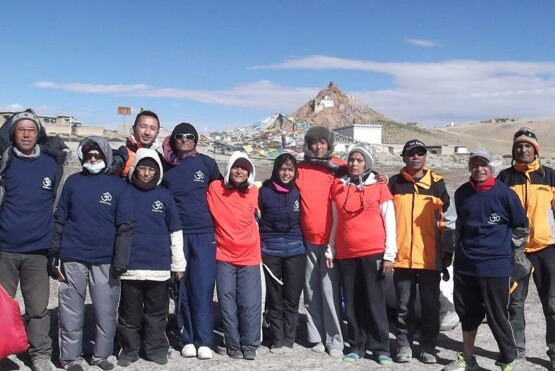
A Nepal trekking packing list needs layered clothing, sturdy broken-in boots, a 30L-35L daypack, a 4-season sleeping bag, sun and altitude protection, and required documents, with the exact mix shifting by season and elevation. Trekkers heading above 4,000m/13,123ft need warmer layers even in peak season, since Everest Base Camp averages around -10°C/14°F in winter and can drop well below freezing at night even in spring.
Packing for a Himalayan trek is less about bringing everything and more about bringing the right things for the specific altitude and season. Duration, route, and time of year all change what belongs in the bag. This guide breaks the Nepal trekking packing list down by altitude zone and season, covers what Himalayan Glacier provides versus what trekkers should bring, and explains what to rent or buy once in Kathmandu.
What Should I Pack for a Nepal Trek?
A complete Nepal trekking packing list falls into six categories: layered clothing, footwear, sleeping and carrying gear, health and safety items, documents, and accessories. The table below gives a starting checklist that applies to most teahouse treks in Nepal, including Everest Base Camp, Annapurna Base Camp, and Manaslu Circuit.
| Category | Core Items | Notes |
| Clothing | Base layers, fleece, insulated down jacket, waterproof shell, trekking pants, hat, gloves, buff | Layer system matters more than any single heavy item |
| Footwear | Broken-in hiking boots, camp shoes, 3-4 pairs wool trekking socks, gaiters (winter) | Boots should be broken in at least 2-3 weeks before departure |
| Sleeping & Carrying | 4-season sleeping bag (rated to -15C/5F or lower), duffel bag, 30L-35L daypack | Himalayan Glacier supplies sleeping bag and duffel bag on most packages |
| Health & Safety | First-aid kit, personal medications, water purification, sunscreen SPF 50+, altitude sickness medication (as prescribed) | Consult a doctor about altitude sickness prevention before departure |
| Documents | Passport (6+ months validity), visa, travel insurance, trip permits, passport photos | Carry both digital and paper copies |
| Accessories | Headlamp with spare batteries, trekking poles, Nalgene water bottles (2x), power bank, sunglasses (category 3-4) | Sunglasses are essential above 3,500m/11,483ft for glare and UV protection |
Guide Insight Himalayan Glacier’s guides recommend against over-packing. Porters on most Nepal teahouse treks are limited to carrying 15kg/33lbs of a trekker’s personal belongings, so packing light and layering strategically matters more than bringing backup gear for every scenario.
How Should I Layer Clothing for Different Nepal Trekking Altitudes?
Nepal’s trekking routes cross several climate zones in a single itinerary, so a packing list built around one altitude will fail at another. The layering system below breaks Nepal’s trekking terrain into three elevation bands, each requiring a different clothing strategy.
| Altitude Zone | Typical Elevation | Clothing Strategy |
| Lower/Foothill | Below 3,000m / 9,843ft | Lightweight moisture-wicking shirts, trekking pants, light fleece for evenings, sun hat |
| Mid-Altitude | 3,000m-4,000m / 9,843ft-13,123ft | Base layer plus mid-weight fleece, softshell or windproof jacket, warm hat and gloves for mornings and evenings |
| High Altitude | 4,000m-5,500m / 13,123ft-18,045ft | Full layering system: base layer, insulating fleece, down jacket, waterproof/windproof shell, insulated gloves, balaclava or buff |
At Everest Base Camp itself, elevation reaches 5,364m/17,598ft, where temperatures rarely climb above freezing even outside winter. Strong winds across exposed ridgelines make wind resistance as important as insulation, which is why a windproof outer shell is non-negotiable on any high-altitude Nepal itinerary.
What Packing List Do I Need for Spring, Autumn, Winter, or Monsoon Trekking in Nepal?
Autumn (September to November) and spring (March to May) are the most popular trekking seasons in Nepal, offering stable weather and clear mountain views. Winter and monsoon trekking are possible on select routes but require different gear priorities. Recommended Clothing Layers for a Nepal Trek:
| Season | Months | Conditions | Packing Priority |
| Spring | March-May | Lower elevations up to 32C/89F, higher altitudes around 20C/68F, occasional rain | Sun protection, lighter mid-layers, rain shell for occasional showers |
| Autumn | September-November | Clear skies, moderate temperatures, cooler as season progresses into November | Standard layering system, warm layer for November treks |
| Winter | December-February | Cold, with Everest Base Camp averaging near -10C/14F; heavy snow possible at altitude | Heavier down jacket, insulated gloves, extra base layers, warm sleeping bag |
| Monsoon (Summer) | June-August | Hot, humid lower elevations, heavy rainfall, cooler at altitude (12C-25C / 53F-77F in mountain regions) | Waterproof gear, quick-dry clothing, leech socks for lower-elevation trails |
Guide Insight Himalayan Glacier’s guides note that early spring mornings and late autumn nights (into November) can still drop well below freezing at higher elevations, even though daytime conditions feel mild. Trekkers packing for shoulder-season departures should still bring a full high-altitude layering system.
What Footwear and Gear Do I Need for High-Altitude Nepal Treks?
Footwear failures are one of the most common preventable problems on Himalayan treks. Boots need to be broken in well before departure, and the gear list below covers the sleeping, carrying, and mobility equipment most teahouse treks require.
- Broken-in, waterproof hiking boots with ankle support, ideally worn on at least 2-3 practice hikes before the trip
- Camp shoes or sandals for evenings at teahouses
- 3-4 pairs of moisture-wicking, cushioned trekking socks
- A 4-season sleeping bag rated for sub-freezing temperatures at higher elevations
- A daypack of 30L-35L with a hip belt, for carrying daily essentials while porters carry the main duffel bag
- Trekking poles, particularly useful on steep descents and river crossings
- A duffel bag for porter-carried gear, within the 15kg/33lb weight limit most operators enforce
Himalayan Glacier supplies a sleeping bag, duffel bag, and down jacket rated for all seasons as part of most trekking packages, which reduces how much cold-weather gear international trekkers need to fly in with.
What Documents, Health, and Safety Items Belong on a Nepal Trekking Packing List?
Beyond clothing and gear, a Nepal trekking packing list needs to account for paperwork, medication, and altitude-related health preparation. None of these items are optional for treks above 3,000m/9,843ft.
- Passport with at least 6 months of validity remaining, plus 2-3 photocopies
- Nepal visa (available on arrival at Kathmandu airport for most nationalities) or pre-arranged visa where required
- Travel insurance covering high-altitude trekking, medical evacuation, and trip cancellation
- 4 passport-sized photos for permits and documentation
- A basic first-aid kit, including any personal prescription medication
- Altitude sickness medication, taken only after consultation with a physician or the trip’s guide
- Water purification tablets or a filtering water bottle, in addition to standard water bottles
Trekkers should consult their guide before taking any altitude sickness medication, since some common sleep aids act as respiratory depressants and are not recommended at high elevation.
What Should I Rent vs. Buy in Kathmandu Before a Nepal Trek?
Thamel, Kathmandu’s main tourist district, has dozens of trekking gear shops offering both rentals and purchases, which means international trekkers do not need to buy every item before flying to Nepal. The table below breaks down what typically makes more sense to rent versus buy.
| Rent in Kathmandu | Buy in Kathmandu | Bring from Home |
| Down jackets, sleeping bags, trekking poles | Base layers, socks, gloves, hats, gaiters | Broken-in hiking boots |
| Crampons and technical gear for high passes | Branded and knockoff outdoor apparel (North Face, Mountain Hardwear-style stores) | Personal medications and prescriptions |
| Duffel bags (often provided by trek operator) | Water bottles, snacks, basic toiletries | Travel insurance documentation |
Rental rates in Thamel run as low as USD 1 per day for items like down jackets, trekking poles, and backpacks, making it a practical option for trekkers who do not want to fly with bulky cold-weather gear. Himalayan Glacier’s local team can help direct trekkers toward reputable, well-maintained rental shops rather than the first stall they encounter.
Limited Spring 2027 Departures Filling Fast
Spring is one of the two peak trekking windows in Nepal, and guided departures fill early. Reserve a spot now and get a personalized gear checklist matched to your exact route and season.
Check Spring Availability
What Does Himalayan Glacier Provide vs. What Should Trekkers Bring Themselves?
Understanding what a trekking operator supplies helps avoid duplicate or unnecessary packing. On most Himalayan Glacier packages, including the Everest Base Camp Trek, the following are included as part of the trip cost:
- Teahouse lodge accommodation throughout the trek
- Three meals a day while on the trekking route
- A 4-season sleeping bag
- A duffel bag for porter-carried gear
- A down jacket rated for all seasons
Trekkers are still responsible for personal clothing layers, footwear, daypacks, documents, travel insurance, and personal health and hygiene items.
Frequently Asked Questions
A Nepal trekking packing list should include layered clothing (base layer, fleece, down jacket, waterproof shell), broken-in hiking boots, a 30L-35L daypack, a 4-season sleeping bag, sun protection, a headlamp, trekking poles, and required documents such as a passport, visa, and travel insurance. The exact mix depends on the season and maximum altitude of the specific route.
A Nepal trekking packing list should include layered clothing (base layer, fleece, down jacket, waterproof shell), broken-in hiking boots, a 30L-35L daypack, a 4-season sleeping bag, sun protection, a headlamp, trekking poles, and required documents such as a passport, visa, and travel insurance. The exact mix depends on the season and maximum altitude of the specific route.
Yes. Temperatures at Everest Base Camp, sitting at 5,364m/17,598ft, average around -10C/14F in the coldest winter months and regularly drop below freezing at night even during spring and autumn. A down jacket is included in most Himalayan Glacier Everest Base Camp packages.
Yes. Thamel, Kathmandu’s tourist district, has numerous shops renting items such as down jackets, sleeping bags, and trekking poles, with rates starting around USD 1 per day. Renting is a practical option for bulky cold-weather gear that international trekkers do not want to fly with.
Most trekking operators, including Himalayan Glacier, limit porters to carrying 15kg/33lbs of a trekker’s personal belongings in the main duffel bag. Daypack items carried by the trekker are separate from this limit.
Autumn (September to November) and spring (March to May) are considered the best trekking seasons in Nepal, with clearer skies and more stable weather. Each season still requires a full layering system at higher elevations, since nighttime and high-altitude temperatures drop well below freezing regardless of season.
Himalayan Glacier provides a 4-season sleeping bag, a duffel bag, and an all-season down jacket as part of most trekking packages, in addition to teahouse lodging and three daily meals. Trekkers are responsible for personal clothing, footwear, and documentation.
Get a Packing List Matched to Your Exact Route
Every Himalayan Glacier trip includes a free consultation with Nepal-based trekking specialists, backed by a US support office in Baltimore, MD, and Feefo-verified reviews from past trekkers.