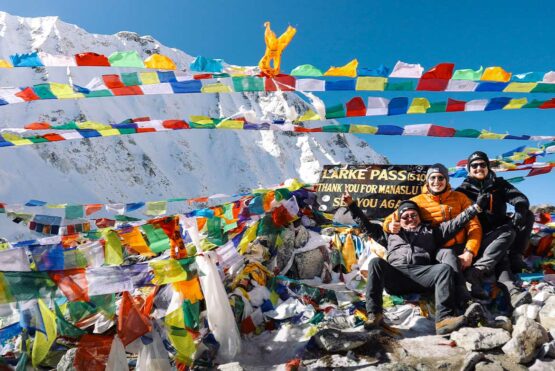
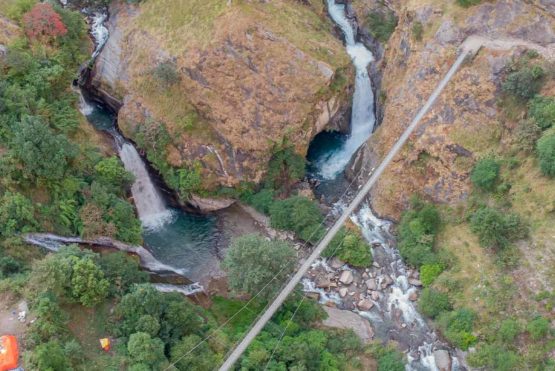
The Manaslu Circuit Trek is rated moderately difficult to challenging, roughly 7 out of 10, on a 14 day itinerary covering about 177km/110mi with 5 to 6 hours of daily walking, rising to 8 to 10 hours on the day it crosses Larkya La Pass at 5,106m/16,752ft. As of March 22, 2026, Nepal removed the mandatory two-trekker minimum for restricted-area permits, so a solo traveler can now book the trek alone. A licensed guide is still mandatory. The permit hurdle is gone; the altitude and terrain are not.
For years, every article answering “how hard is the Manaslu Circuit” recycled the same fitness generalities and Larkya La Pass statistics. That answer is now incomplete. In March 2026, Nepal’s Department of Immigration scrapped the rule that had forced solo trekkers to pair up with a stranger just to obtain a restricted-area permit. The logistical obstacle disappeared. The physical one, a high, remote pass at nearly the same altitude as Everest Base Camp Trek, did not.
How Difficult Is the Manaslu Circuit Trek, Really?
Himalayan Glacier rates the Manaslu Circuit Trek as moderately difficult to challenging. The difficulty comes from four compounding factors rather than any single obstacle: sustained altitude gain, daily walking duration, remote and variable terrain, and the total length of the itinerary.
| Difficulty Factor | Detail |
| Altitude | Rises from 710m/2,329ft (Machha Khola) to 5,106m/16,752ft (Larkya La Pass) |
| Daily walking | 5 to 6 hours most days; 8 to 10 hours on the Larkya La crossing |
| Terrain | Steep river gorges, suspension bridges, glacial moraine, and snow/ice near the pass |
| Trek length | 14 days on Himalayan Glacier’s standard itinerary, covering roughly 177km/110mi |
| Remoteness | Restricted area with limited teahouse density and no road access beyond Machha Khola |
What Changed With the March 2026 Permit Rule, and Does It Affect Difficulty?
Until March 22, 2026, Nepal’s restricted-area permit system required a minimum of two foreign trekkers listed on a single permit application. A solo traveler could not obtain the Manaslu Restricted Area Permit alone; they either had to find a second trekker or pay an agency to list a second name. On that date, Nepal’s Department of Immigration formally removed the two-trekker minimum across all restricted-area districts, Manaslu included.
What this means in practice: a solo trekker can now apply for the Manaslu Restricted Area Permit as an individual, at the standard per-person fee. What has not changed is the requirement for a licensed guide from a registered trekking agency. “Solo” on Manaslu has always meant, and still means, one traveler and one guide, not one traveler walking alone.
For the difficulty conversation, this is a genuine improvement for solo travelers, but only on the logistical side. The rule change removes a bureaucratic barrier. It does not shorten Larkya La Pass, lower its elevation, or reduce the number of hours spent walking each day. A solo trekker in 2026 faces the same physical trek as a group trekker; they simply no longer need to recruit a stranger to get there.
How Does Larkya La Pass Compare to Other Himalayan Passes?
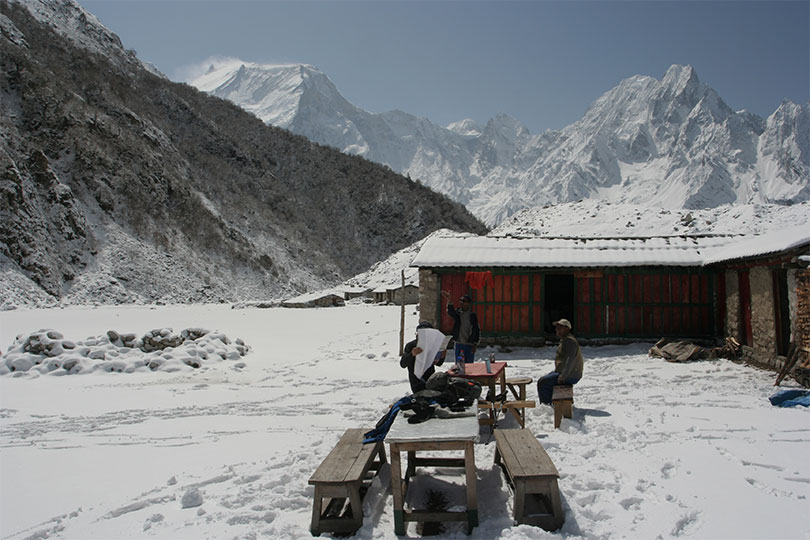
Larkya La Pass, at 5,106m/16,752ft, is the highest point on the Manaslu Circuit and one of the longer high-altitude crossings in Nepal. Measured against the two routes it is most often compared to, it sits close to Everest Base Camp in elevation and just below the Annapurna Circuit’s Thorong La Pass.
| Trek | Highest Point | Typical Itinerary | Permit Type |
| Manaslu Circuit | Larkya La Pass, 5,106m / 16,752ft | 14-16 days | Restricted Area Permit + MCAP + guide mandatory |
| Everest Base Camp | EBC, 5,364m / 17,598ft | 12-16 days | Sagarmatha National Park permit + local permit |
| Annapurna Circuit | Thorong La Pass, 5,416m / 17,769ft | 16-18 days | ACAP + TIMS card |
The elevation gap between the three high points is narrow, all sit within about 300m/1,000ft of each other, so altitude risk is comparable across all three. The meaningful difference is infrastructure. Everest Base Camp and the Annapurna Circuit are established, well-trodden routes with dense teahouse networks and mobile coverage in most sections. Manaslu remains a restricted area with fewer teahouses, less consistent connectivity, and a guide requirement that the other two routes do not carry in the same form.
How Many Hours Do You Walk Each Day on the Manaslu Circuit?
Most trekking days on the Manaslu Circuit involve 5 to 6 hours of walking. That figure extends to 8 to 10 hours on the single hardest day of the trip, the crossing of Larkya La Pass, which begins before dawn to clear the pass while wind and weather conditions are most stable.
- Lower-elevation days (Machha Khola to Jagat): 5 to 6 hours over roughly 15-20km/9-12mi of gorge trail
- Mid-elevation acclimatization days (Samagaon, Samdo): shorter walking days built around rest, not distance
- Larkya La Pass crossing day: 8 to 10 hours, including a pre-dawn start and a long descent to Bimthang
- Total trail distance: approximately 177km/110mi across the standard itinerary


Is the Manaslu Circuit Trek Harder Than Everest Base Camp?
In terms of raw altitude, no. Everest Base Camp sits higher, at 5,364m/17,598ft, compared to Larkya La Pass at 5,106m/16,752ft. In terms of overall trek difficulty, the Manaslu Circuit is generally considered the harder undertaking, because it combines similar altitude exposure with a high mountain pass crossing (something the EBC route does not require), a longer average trekking day, and a more remote trail with fewer support services along the way.
Everest Base Camp is also the far more established route: wider trails, more frequent teahouses, and mobile signal across most of the Khumbu region. Manaslu’s restricted-area status keeps trekker numbers lower and infrastructure thinner, which adds a logistical dimension to the physical difficulty that Everest Base Camp does not carry to the same degree.
Spring 2026 Manaslu Departures Are Filling
Larkya La Pass conditions are best in spring and fall, and guide availability for the restricted-area season tightens well before departure dates arrive. Secure a licensed guide and permit slot now.
Check Manaslu Departure Dates
What Fitness Level and Training Do You Need for Manaslu?
Himalayan Glacier recommends beginning fitness preparation at least three months before departure, built around sustained cardiovascular conditioning rather than short bursts of intensity. The trek does not require technical climbing skills or rope work under normal seasonal conditions, but it does demand the ability to walk for multiple consecutive hours, on consecutive days, at altitude.
- Build a base of roughly 12km/7.5mi of walking, hiking, or jogging per session, several times a week
- Include stair climbing or hill repeats with a loaded daypack to simulate uneven, ascending terrain
- Prior high-altitude trekking experience is not required, but general trekking or long-distance hiking experience helps with pacing and gear familiarity
- Cardiovascular fitness alone does not prevent altitude sickness; ascent rate and acclimatization matter more than fitness level
How Is Altitude Sickness Managed on the Manaslu Circuit?
Acute Mountain Sickness (AMS) is the primary medical risk on the Manaslu Circuit, driven by the rate of ascent rather than physical fitness. Himalayan Glacier’s guides are trained in Wilderness First Aid and follow a walk-high, sleep-low approach on the two acclimatization days built into the standard itinerary, at Samagaon and Samdo, before the push to Larkya La Pass.
Himalayan Glacier’s guides recommend: ascending slowly with scheduled rest days, staying well hydrated throughout the trek, eating a full, calorie-sufficient diet despite reduced appetite at altitude, and avoiding alcohol and tobacco for the duration of the trip. Any trekker experiencing persistent AMS symptoms is expected to report them to their guide immediately rather than push through to the next stop.
How Much Does the Manaslu Circuit Trek Cost in 2026?
Pricing on the Manaslu Circuit Trek varies with itinerary length, group size, and service level. A fully guided package from Kathmandu, including permits, a licensed guide, teahouse accommodation, and trail meals, runs approximately $2,100 per person on Himalayan Glacier’s standard itinerary, with budget departures starting around $1,800 and luxury guided experiences reaching $4,500.
| Tier | Approximate Cost (per person) | What’s Included |
| Budget | From $1,800 | Standard teahouse lodging, shared rooms, guide, permits |
| Mid-range (standard) | $2,000 – $2,800 | Guide, permits, teahouse meals, better-rated lodges |
| Luxury | Up to $4,500 | Upgraded lodges, enhanced service, private room options |
Permit costs are separate from the trek package and depend on season and duration. The Manaslu Conservation Area Permit runs roughly $20, and the Restricted Area Permit is priced per week, typically around $75 for the first week in peak season with a daily surcharge beyond that. Exact current permit and package pricing should always be confirmed directly, since restricted-area fees are set by the Nepal government and can be adjusted independently of tour pricing.
Nepal Expertise, Backed by a USA Support Office
Himalayan Glacier has run guided treks in the Manaslu region since 1992, with a Baltimore, MD support office handling booking and questions for USA, UK, Australian, and Canadian trekkers.
Frequently Asked Questions
The Manaslu Circuit Trek is rated moderately difficult to challenging, roughly 7 out of 10. Difficulty comes from a high-altitude pass crossing at 5,106m/16,752ft, 5 to 6 hours of daily walking (up to 10 hours on the pass day), and a remote, 17 to 18-day itinerary with limited infrastructure compared to more established routes.
Yes. As of March 22, 2026, Nepal removed the requirement for a minimum of two trekkers on a restricted-area permit application, so a solo traveler can now obtain the Manaslu Restricted Area Permit individually. A licensed guide from a registered trekking agency remains mandatory; fully independent, guideless trekking is still not permitted in the Manaslu region.
Everest Base Camp reaches a slightly higher elevation, 5,364m/17,598ft versus 5,106m/16,752ft for Larkya La Pass, but the Manaslu Circuit is generally considered the more physically demanding trek overall, since it adds a high pass crossing, longer average daily walking hours, and a more remote trail with fewer teahouses and less mobile coverage.
The highest point is Larkya La Pass at 5,106m/16,752ft, crossed roughly two-thirds of the way through the standard 17 to 18-day itinerary. It is one of the longer high-altitude pass crossings in Nepal, typically requiring 8 to 10 hours to cross in a single day.
Most days involve 5 to 6 hours of walking. The Larkya La Pass crossing day is the exception, typically requiring 8 to 10 hours due to the pre-dawn start, the altitude, and the long descent to Bimthang on the far side of the pass.
Prior high-altitude trekking experience is not a strict requirement, but a strong base level of cardiovascular fitness and some multi-day hiking experience make the trek considerably more manageable. Himalayan Glacier recommends starting trek-specific training at least three months in advance of departure.
Winter (December through February) is the most physically demanding season, with heavy snow at Larkya La Pass increasing both difficulty and risk of the crossing being temporarily closed. Spring (March to May) and fall (September to November) are the recommended seasons, offering the most stable weather for the pass crossing.
Plan Your Manaslu Circuit Trek With Confidence
From permit paperwork to pass-day logistics, Himalayan Glacier’s Nepal-based guides and Baltimore support team handle the details so the difficulty you’re training for is the trail, not the planning.