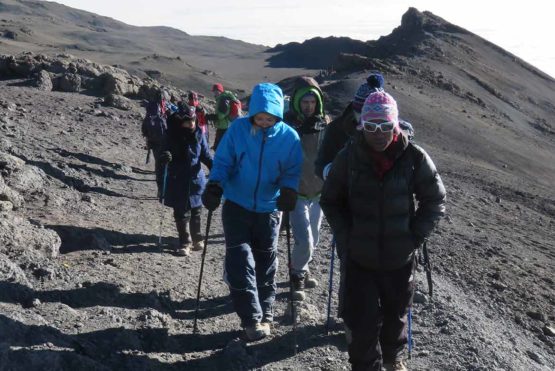
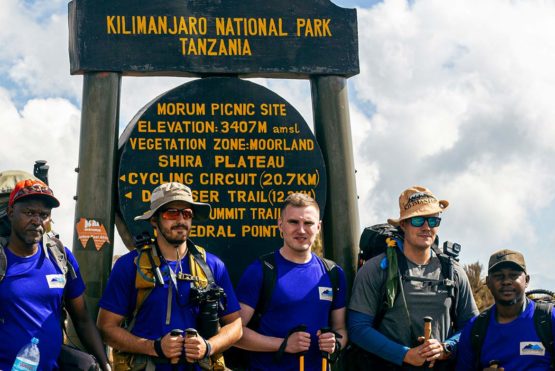
Beginners do not need prior mountaineering experience to climb Kilimanjaro (5,895m / 19,341ft), but they do need genuine cardiovascular fitness built over 12 to 16 weeks of consistent training, the ability to walk uphill for 6 to 8 hours a day on consecutive days, and a route chosen for gradual acclimatization such as the Marangu or Machame route.
Mount Kilimanjaro is often described as the easiest of the Seven Summits, and technically that is true: no ropes, no crampons, no climbing experience required. But “non-technical” does not mean “easy.” Every year, thousands of first-time trekkers arrive at Kilimanjaro National Park underestimating the physical toll of walking at altitude for six to nine consecutive days. This guide breaks down exactly what fitness level a beginner actually needs, how to train for it, and which routes are built for a first-time climber’s body.
Do You Need Prior Hiking Experience to Climb Kilimanjaro?
No. Kilimanjaro does not require any technical climbing skills or previous high-altitude hiking experience. It is classified as a trek, not a climb, in the mountaineering sense: the trails involve no ropes, ice axes, or rock scrambling on any of the standard routes.
That said, not every beginner succeeds. Himalayan Glacier’s guides note that trekkers without any hiking background have a real chance of summiting on gradual, well-acclimatized routes like Marangu or Rongai, but the odds drop noticeably on steeper, faster routes such as Umbwe, where the terrain and pace punish an unconditioned body more quickly.
The deciding factor is not experience. It is cardiovascular endurance, mental resilience, and the route’s acclimatization profile.
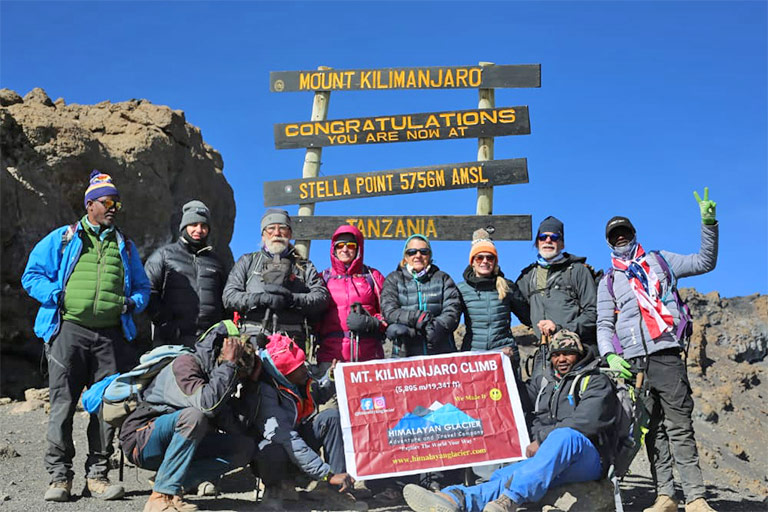


What Level of Fitness Do You Actually Need for Kilimanjaro?
Kilimanjaro does not demand elite athleticism, but it does demand sustained, low-intensity endurance rather than short bursts of power. Marathon runners and CrossFit competitors fail to summit every season, while moderately fit beginners with the right training succeed regularly. The table below shows what the body is actually asked to do.
| Physical Demand | What Kilimanjaro Requires |
| Daily hiking time | 6 to 8 hours of uphill walking per day |
| Consecutive trekking days | 6 to 8 days back-to-back, with no rest day off the mountain |
| Daypack weight carried | 6 to 8kg / 13 to 18lb, carried every day even with porter support |
| Summit night duration | 14 to 18 hours of continuous effort, including ascent and descent |
| Total descent | Roughly 4,000m / 13,123ft of elevation loss over the two days after summiting |
| Oxygen availability at the summit | Approximately 50 percent of sea-level oxygen at Uhuru Peak (5,895m / 19,341ft) |
Two elements catch beginners off guard most often. The first is summit night itself: a midnight start, sub-freezing temperatures, and 6 to 8 hours of steady uphill effort in thin air before the descent even begins. The second is the descent, which drops trekkers roughly 4,000m / 13,123ft in about two days and places heavy eccentric load on the quads and knees, often doing more damage to unconditioned legs than the ascent did.
Start Training With a Route That Matches Your Fitness
Larkya La Pass conditions are best in spring and fall, and guide availability for the restricted-area season tightens well before departure dates arrive. Secure a licensed guide and permit slot now.
👉 Check Available Departure Dates
How Should Beginners Train for Kilimanjaro?
Himalayan Glacier’s guides recommend against interval-style training as the centerpiece of Kilimanjaro prep. Summit night is a test of sustained, low-intensity output over many hours, not short bursts, so training should mirror that demand: long, slow, weighted hikes rather than sprints.
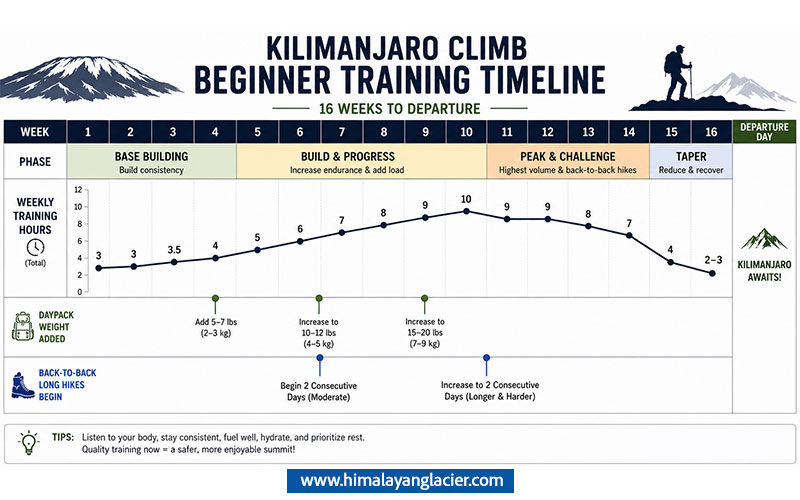
A 12 to 16 week runway is the realistic minimum for someone starting from a sedentary or lightly active baseline. Trekkers coming from a stronger aerobic base can compress this, but the training focus stays the same: aerobic endurance, leg strength under load, and time spent walking, not just exercising.
| Weeks Before Departure | Training Focus |
| 16 to 12 weeks out | Build a base of 3 to 4 cardio sessions per week (brisk walking, hiking, cycling, or the stair machine), 30 to 45 minutes each |
| 12 to 8 weeks out | Add weekly hill walks or stair climbs with a loaded daypack (start at 4 to 5kg / 9 to 11lb); begin strengthening calves, quads, and glutes |
| 8 to 4 weeks out | Extend to back-to-back long hikes on weekends (4 to 6 hours), building toward the trip’s daily daypack weight of 6 to 8kg / 13 to 18lb |
| 4 to 1 weeks out | Taper volume, keep frequency, break in the exact boots and daypack that will be worn on the mountain, and prioritize sleep |
For trekkers who are not currently active at all, Himalayan Glacier’s guides suggest starting with something as simple as a daily hour of brisk walking or light jogging, five days a week, before layering in hills and weight. No specialized mountaineering training is required. Regular hill-walking with a small pack, combined with two months of consistent gym or cardio work, covers most of what a beginner needs.
Strength work should target the muscles that take the heaviest load on summit night and the descent: calves and quads for the steady uphill grind, and hips, glutes, and core for stability carrying a pack over uneven, rocky terrain for many consecutive hours.
Which Kilimanjaro Route Is Best for Beginners?
Route choice affects a beginner’s odds as much as fitness does, mainly because longer routes give the body more days to acclimatize before the summit push. Himalayan Glacier designs all of its Kilimanjaro itineraries around gradual ascent profiles, but two routes stand out for first-time trekkers.
| Route | Duration | Accommodation | Why It Suits Beginners |
| Marangu Route | 8 days / 7 nights | Shared mountain huts with bunk beds | No previous hiking experience required; gradual, direct paths; an extra acclimatization night is built in at Horombo Hut (3,720m / 12,205ft) |
| Machame Route | 8 days / 7 nights | Camping (tents) | Used by roughly half of all Kilimanjaro trekkers; more gradual acclimatization profile than steeper alternatives, though rated a more physically demanding trail than Marangu |
| Rongai Route | Contact for current itinerary details | Camping (tents) | Approaches from the quieter northern side; Himalayan Glacier’s guides specifically recommend it to trekkers with limited hiking or backpacking background |
Both the Marangu and Machame routes run 8 days / 7 nights and are priced from $3,199 and $3,299 per person on a twin-share basis.
Both the Marangu route and the Machame route are rated “Demanding” on Himalayan Glacier’s own trip grading scale, even though Marangu is widely considered the easiest route to the summit. That grading reflects the honest reality of Kilimanjaro: altitude alone makes it a serious undertaking regardless of how gentle the trail underfoot feels. Full itineraries, dates, and current pricing are available on the Kilimanjaro Classic Climb via Marangu Route and Kilimanjaro Climb via Machame Route trip pages.
How Does Fitness and Route Choice Affect Summit Success Rates?
Industry-wide, the average summit success rate across all Kilimanjaro routes is around 65 percent, driven mainly by altitude sickness rather than physical exhaustion or terrain difficulty. Route choice moves that number significantly: the Machame route, for example, reports a success rate in the 80 to 90 percent range thanks to its gradual profile and built-in acclimatization stops.
Himalayan Glacier’s guides attribute its own Kilimanjaro success rate of over 85 percent to a combination of longer acclimatization schedules, close guide-to-trekker monitoring, and realistic pre-trip fitness guidance rather than the shortest, cheapest itinerary available.
What Does a Typical Trekking Day Feel Like Physically?
Early days on both the Marangu and Machame routes move through rainforest at a gentle grade, typically 5 to 7 hours of hiking covering 10 to 11km / 6 to 7 miles. Mid-trip days climb into alpine moorland and desert terrain, with short, deliberate acclimatization side-hikes added at camps like Shira 2 (3,900m / 12,796ft) and Horombo Hut (3,720m / 12,205ft) to help the body adjust before pushing higher.
Summit night is a different category of effort entirely. Trekkers wake before midnight, climb 4 to 8 hours in the dark and cold to reach the crater rim, then continue to Uhuru Peak (5,895m / 19,341ft) before descending most of the way back down in the same day. On the Machame route this means a combined summit and descent day of 9 to 12 hours of hiking; on Marangu, guides typically log 9 to 12 hours as well, covering roughly 16km / 10 miles.
Talk to a Kilimanjaro Specialist Before You Commit
I know how many questions come up once the training plan gets real. Our Baltimore-based team and Feefo-verified reviews are there so you can ask every question before booking, not after.
What If You Are Not a Regular Exerciser? Can Beginners Still Summit?
Yes, with an honest run-up. Himalayan Glacier’s guides note that trekkers who are not currently in the habit of exercising should not attempt a compressed training plan. Starting with an hour of brisk walking or light jogging five days a week builds the aerobic base needed before hills, weighted packs, or back-to-back long days get added.
The riskiest pattern is not being unfit; it is being unfit and choosing a fast, steep route to compensate for limited vacation time. A beginner starting from zero who commits to 16 weeks of training and books Marangu or Machame has a realistic path to the summit. A beginner who skips training and books the shortest, cheapest itinerary is stacking two risk factors instead of managing one.
Frequently Asked Questions
No. Kilimanjaro requires no technical climbing skills or prior high-altitude hiking experience. What matters more is cardiovascular endurance built through structured training and choosing a route, such as Marangu or Machame, with enough built-in acclimatization time.
Most days involve 5 to 7 hours of hiking, though summit night runs 9 to 12 hours of continuous ascent and descent, depending on the route.
Himalayan Glacier’s guides recommend 12 to 16 weeks of consistent training for most beginners, focused on aerobic endurance, weighted hill walking, and leg strength, tapering in the final one to two weeks before departure.
Marangu is generally considered the easier and more direct route, with hut accommodation and an extra acclimatization night at Horombo Hut. Machame is more physically demanding underfoot but remains one of the most popular routes due to its scenic variety and gradual acclimatization profile.
The industry-wide average across all routes is around 65 percent, driven mainly by altitude sickness. Longer, well-acclimatized routes report considerably higher rates, and Himalayan Glacier’s own Kilimanjaro trips report a success rate of over 85 percent.
Porters carry the bulk of camping and personal gear, but every trekker still carries a daypack of roughly 6 to 8kg / 13 to 18lb each day, containing water, snacks, layers, and personal essentials.
Yes, though Tanzanian park regulations require every climber, solo or in a group, to be accompanied by a licensed guide and support crew. A solo trekker is typically supported by a ratio of about four crew members to one climber.
Fitness for Kilimanjaro is less about athletic pedigree and more about consistent, honest preparation: months of aerobic training, a realistic route choice, and respect for what altitude does to even a strong body. Beginners who train properly and choose a route built for acclimatization summit at meaningfully higher rates than those who rely on natural fitness alone.
Ready to Plan Your First Kilimanjaro Climb?
I can walk you through route options, training timelines, and real trekker reviews so your first big mountain goal starts on solid footing, not guesswork.