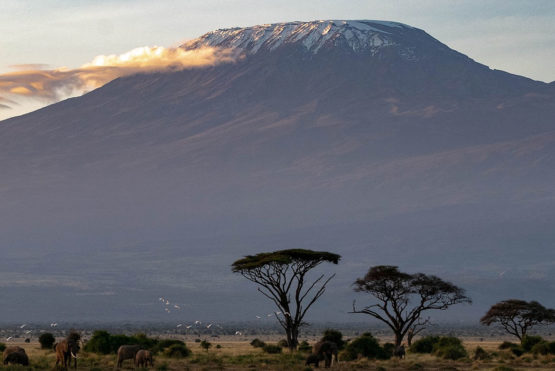
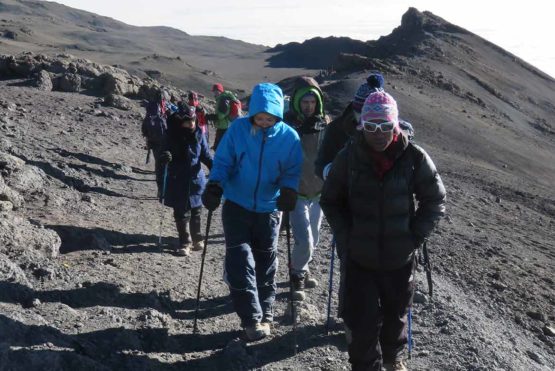
A structured, week-by-week Kilimanjaro training plan built for real climbers whether you’re a complete beginner or already active. Follow this 16-week schedule and your body will be ready for summit night at 5,895m / 19,341ft.
What This Guide Covers
This is a full Kilimanjaro training plan used with actual Kilimanjaro climbers by Himalayan Glacier, a team that has guided expeditions since 1992. It covers every phase of preparation: cardio, strength, pack training, descent conditioning, and altitude strategy. If you’re already planning your climb, explore our detailed Kilimanjaro Climbing via Lemosho Route and Kilimanjaro Climbing via Northern Circuit Route.
If you’re wondering how fit you need to be before starting, that’s a separate question and a great one to answer first. But if you’re ready to train, this plan is where you begin.
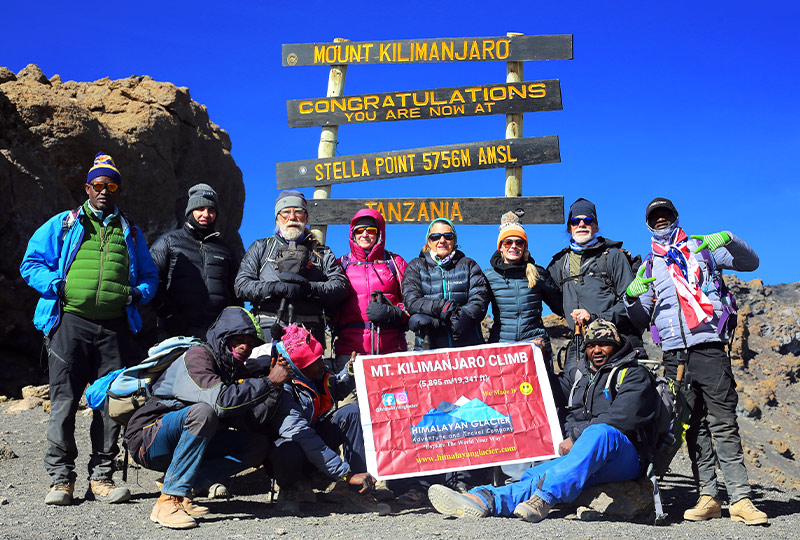
How Fit Do You Need to Be for Kilimanjaro?
You don’t need to be an elite athlete. But you do need a baseline.
- You should be able to walk briskly for 60 minutes without stopping
- You should have no serious knee, hip, or cardiovascular issues
- If you can currently hike for 2–3 hours, you’re ready to start this plan
Kilimanjaro (5,895m / 19,341ft) is a non-technical climb, no ropes, no ice axes. But it’s long, cold, and high. The summit attempt (summit night) is typically 6–8 hours of uphill hiking followed by a 4–5 hour descent. Your training needs to prepare you for exactly that.
How to Use This 16-Week Plan
Each week has six consistent elements:
- One long weighted hike (your main training session)
- One secondary hike or interval session
- Three to four cardio sessions (mostly Zone 2 pace)
- Two strength sessions (40–60 minutes each)
- Daily stretching (10–20 minutes)
- One full rest day (non-negotiable)
Every fourth week is a recovery week, volume drops by about 30%. These weeks are not optional. They’re when your body actually adapts to the training load. Skip them and you risk plateauing or getting injured.
Phase 1: Foundation (Weeks 1–4)
Goal: Build a base. Get comfortable walking with weight. Establish cardio and strength habits.
Week 1
- Long hike: 2 hours with 5 kg pack on flat terrain
- Cardio: 3 sessions, 30–45 minutes (Zone 2, conversational pace)
- Strength: 2 sessions; bodyweight squats, lunges, planks
- Stretching: 10 minutes daily (hamstrings, calves, hips)
- Rest: 1 full day
Week 2
- Long hike: 2.5 hours with 5 kg pack on hilly terrain
- Cardio: 3 sessions, 40–50 minutes (Zone 2)
- Strength: 2 sessions; add step-ups
- Stretching: 10–15 minutes daily
Week 3
- Long hike: 3 hours with 6 kg pack, 200m / 656ft elevation gain
- Cardio: 4 sessions, 45 minutes (one slightly harder)
- Strength: 2 sessions; add weighted squats
Week 4: Recovery Week
- Long hike: 2.5 hours with 5 kg pack, easy pace
- Cardio: 3 sessions, 30–40 minutes, easy
- Strength: 1 light session
- Rest: 2 full days
Phase 2: Build (Weeks 5–8)
Goal: Increase hike duration and pack weight. Introduce back-to-back weekend hikes.
The back-to-back format is critical. On Kilimanjaro, you hike long days consecutively for 7–9 days. Your body needs to learn to recover and go again.
Week 5
- Saturday long hike: 4 hours with 7 kg pack, 400m / 1,312ft gain
- Sunday recovery hike: 1.5 hours with 5 kg pack
- Cardio: 3 sessions; mix Zone 2 with one interval session
- Strength: 2 sessions, increase weights
Week 6
- Saturday long hike: 5 hours with 8 kg pack, 500m / 1,640ft gain
- Sunday recovery hike: 2 hours with 5 kg pack
- Strength: Add lunges with weights
Week 7
- Saturday long hike: 6 hours with 9 kg pack, 600m / 1,969ft gain
- Sunday back-to-back: 3 hours with 7 kg pack on different terrain
- Strength: Focus on posterior chain deadlifts, glute bridges
Week 8: Recovery Week
- Saturday hike: 4 hours with 7 kg pack, easy pace
- Cardio: 3 sessions, 30–45 minutes, easy
- Rest: 2 full days
Phase 3: Peak (Weeks 9–12)
Goal: Maximum training load. Your hardest weeks. Build the endurance for summit night.
This is where the plan separates serious climbers from those who show up underprepared.
Week 9
- Saturday hike: 7 hours with 10 kg pack, 700–900m / 2,297–2,953ft gain
- Sunday back-to-back: 4 hours with 8 kg pack
- Cardio: Zone 2 + one interval session
- Strength: Increase weights
Week 10
- Saturday hike: 8 hours with 10 kg pack, 1,000m / 3,281ft gain
- Sunday back-to-back: 4–5 hours with 8 kg pack
Week 11
- Saturday hike: 8 hours with 12 kg pack, 1,000–1,200m / 3,281–3,937ft gain
- Sunday back-to-back: 5 hours with 10 kg pack
- Strength: Focus on knee stability
Week 12: Recovery Week
- Saturday hike: 5 hours with 8 kg pack, easy pace
- Rest: 2 full days
Phase 4: Focus and Slowdown (Weeks 13–16)
Goal: Peak fitness, then reduce volume. Simulate summit conditions. Arrive rested.
Week 13: Peak Week
- Saturday hike: 8–10 hours with 12–15 kg pack, 1,200m+ / 3,937ft+ gain, full summit kit
- Sunday back-to-back: 5–6 hours with 10 kg pack
- Strength: Stability and balance focus
Week 14: Final Hard Week
- Saturday hike: 8 hours with 12 kg pack, include a night hike component if possible
- Sunday back-to-back: 4 hours with 10 kg pack
- Strength: Lighter weights
Week 15: Slowdown Begins
- Saturday hike: 5 hours with 10 kg pack, easy pace
- Cardio: 3 sessions, 40 minutes, Zone 2 only
- Strength: 1 light session
- Focus: Pack and re-pack your duffel. Test every layer in cold conditions.
Week 16: Final Week Before Departure
- One 3–4 hour hike: Early in the week with 8 kg pack
- Cardio: 2 sessions, 30 minutes, very easy
- Strength: None
- Rest: At least 3 full rest days, including the 2 days before you fly
- Focus: Sleep 8+ hours nightly. Hydrate. Eat clean. Mental rehearsal.
What If You Don’t Have Hills Nearby?
Plenty of Kilimanjaro climbers train in flat cities. Here’s how to build vertical effort without mountains:
- StairMaster / stair climber: the closest indoor equivalent to uphill hiking. Wear your loaded pack. Build from 30 to 90 minutes.
- Treadmill on maximum incline: set to 12–15% grade and walk (don’t run). Always wear your pack.
- Stadium stairs or office buildings: climb up with your pack, take the lift down. Target 30–60 minutes of continuous climbing.
- Indoor cycling on high resistance: slower cadence, higher resistance to simulate uphill effort
- Weekend trips to hills: even driving 90 minutes twice a month to find real elevation makes a noticeable difference


Strength Training: What Kilimanjaro Climbers Actually Need
Two strength sessions per week is enough. Each session takes 40–60 minutes. Use moderate weights with 12–20 reps per set.
Lower body (every session):
- Bodyweight squats – 3 sets of 15–20
- Walking lunges with light dumbbells – 3 sets of 10 each leg
- Step-ups onto a bench or box – 3 sets of 12 each leg
- Calf raises – 3 sets of 20
- Reverse lunges – 3 sets of 10 each leg
Posterior chain (twice a week):
- Romanian deadlifts – 3 sets of 10–12
- Glute bridges or hip thrusts – 3 sets of 15
- Single-leg deadlifts – 3 sets of 8 each leg
Core (every session):
- Plank – 3 holds of 45–90 seconds
- Side planks – 2 holds of 30–60 seconds each side
- Dead bugs – 3 sets of 10 each side
- Bird dogs – 3 sets of 10 each side
Knee stability (especially weeks 9–14):
- Bulgarian split squats – 3 sets of 10 each leg
- Wall sits – 3 holds of 45–90 seconds
- Single-leg balance with eyes closed – 3 holds of 30 seconds each leg
Training for the Descent. The Part Everyone Forgets
After reaching Uhuru Peak at 5,895m / 19,341ft, you descend nearly 4,000m / 13,123ft over two days. The descent destroys quads, strains knees, blisters feet, and is the most common cause of post-trip injury.
Most climbers train their way up. Very few train their way down. Here’s how to fix that:
- Always walk down, not just up. Every long hike should include real descent. Eccentric loading (what happens to your quads going downhill) only happens going downward.
- Add downhill on the treadmill. Set negative incline (minus 3–6%) for 10–15 minutes per cardio session.
- Box step-downs. Stand on a box. Lower one leg slowly to the floor over 3 seconds. Step back up. 3 sets of 10 each leg, twice weekly from week 6 onward.
- Use trekking poles on every hike from week 4. Studies suggest poles reduce knee impact on descents by up to 25%.
- Build quad endurance, not just strength. Long sets at moderate weight (15–20 reps) train the slow-twitch muscle fibers your quads need during long descents.
Altitude Preparation: What Actually Works
Altitude is the great equalizer on Kilimanjaro. It doesn’t care how fit you are. Here’s an honest look at what helps:
| What works | What’s overhyped |
|---|---|
| Choosing a longer route (8-day Lemosho or 9-day Northern Circuit) | Cheap altitude masks from online retailers |
| Strong cardiovascular base from Zone 2 training over months | One short trip to a high-altitude city a week before your trek |
| Prior altitude exposure above 3,000m / 9,843ft if possible | Hypoxic tents (require sustained, weeks-long use to be effective) |
| Diamox (acetazolamide) at 125mg twice daily, with doctor approval | Internet “Hacks” and unverified supplements |
| Drinking 3–4 litres of water per day on the mountain | Coffee and Alcohol (both dehydrate) |
| Walking pole pole (Swahili for “slowly slowly”) your guide will repeat this constantly. Listen. | Rushing the climb, it makes acclimatization worse. |
The single biggest factor in summit success is route choice. The 8-day Lemosho or 9-day.
Northern Circuit gives your body extra acclimatization days. The longer you spend ascending gradually, the better your body copes at altitude.
Common Training Mistakes That Cost People the Summit
- Training only cardio, no strength or hiking. Marathon fitness does not equal mountain fitness.
- Skipping the weighted pack. Walking with weight changes your gait, posture, and balance. Train exactly as you’ll climb.
- Ignoring the descent. Up is mentally hard. Down is physically destructive. You must train both directions.
- Pushing through pain. A small injury at week 8 is recoverable. The same injury at week 14 ends your trip.
- Breaking in new boots too late. Boots need at least 50 km of break-in time. Buy them by week 6.
- Not testing your actual gear. Your daypack, hiking boots, trekking poles, and base layers should all be used in real training conditions before you board the plane.
- Overtraining in the final two weeks. The taper is intentional. Trust the plan.
- Booking the cheapest, shortest route. Saving a few hundred dollars on a 6-day route can mean a significantly lower summit success rate.
The Final 7 Days Before You Fly
You cannot get fitter in one week. But you can absolutely arrive exhausted and undermine months of hard work. Here’s how to spend the last 7 days:
- Day 7: One easy 60-minute walk. Start packing. Final gear check.
- Day 6: Easy 30-minute cardio. Hydrate aggressively (3+ litres).
- Day 5: Light stretching only. Sleep 8+ hours.
- Day 4: Easy 30-minute walk. Final shopping for any missing kit.
- Day 3: Rest. Long sleep. Confirm all gear fits in your duffel.
- Day 2: Rest. Re-pack carefully. Confirm flights, transfers, and meeting point.
- Day 1 (departure): Travel relaxed. Hydrate. Avoid alcohol on the flight.
What to carry in your carry-on: Hiking boots, base layers, summit gloves, headlamp, prescription medications (including Diamox), passport, travel insurance certificate, and Yellow Fever certificate (required for Tanzania entry from many countries). If your checked duffel is delayed, these items get you on the mountain. Make sure you’ve reviewed our full Kilimanjaro packing list before departure.
Frequently Asked Questions
You don’t need to be an athlete. If you can walk briskly for 60 minutes and have no major joint or cardiovascular issues, you’re ready to begin. The 16-week plan starts gently and builds progressively, it’s designed to bring you from a moderate baseline to summit-ready fitness.
Yes. Kilimanjaro is a non-technical mountain with no climbing skills required. Many first-time trekkers summit successfully every year. The key is following a structured training plan, choosing a longer acclimatization route (like the 8-day Lemosho), and listening to your guides on the mountain.
Four months (approximately 16–17 weeks) is the ideal preparation window. Start with Phase 1 (Foundation) immediately. Build cardio through Zone 2 training, begin hiking with a loaded pack, and introduce strength training twice a week. Follow the progressive overload schedule in this guide and include rest and recovery weeks as written.
You need solid aerobic endurance (able to sustain 6–8 hours of uphill hiking), functional leg strength, and the ability to repeat that effort on consecutive days. This plan builds all three over 16 weeks. Elite fitness is not required, consistency is.
Zone 2 cardio means exercising at a pace where you can hold a conversation roughly 60–70% of your maximum heart rate. Most of your Kilimanjaro ascent happens at this intensity. Training in Zone 2 builds your aerobic base, improves fat metabolism, and is easy enough to sustain daily without burning out.
Real altitude exposure spending a few nights above 3,000m / 9,843ft does help. If you can do a weekend trip to a high-altitude location before your climb, it’s worth it. Altitude masks and one-time visits to high-altitude cities are far less effective than marketing suggests.
The 8-day Lemosho Route and the 9-day Northern Circuit both offer superior acclimatization profiles compared to shorter routes. The extra days at altitude give your body time to adjust, which directly improves your summit odds. Longer routes cost slightly more but deliver a meaningfully better experience and higher success rates.
Ready to Summit Africa’s Highest Peak?
Train smart, choose the right route, and climb with a team that’s guided expeditions for over three decades.
Himalayan Glacier’s expert consultants will match you to the perfect Kilimanjaro itinerary and support you every step of the way.