1.820.3345.33

America’s Himalayan specialists. Baltimore-based. Kathmandu-owned. Since 1992.

33 Years of Guiding in the Himalayas

Guided tours across the Himalayas, Africa, and South America, operated by our own team and trusted partners, booked through our US office in Baltimore.

No outsourcing No middleman Competitive price
  • Nepal

Pisang Peak Climbing  - 18 Days

Feefo logo
US $4,299 US $239 per day
Save To Wish List

Adding item to wishlist requires an account

Summit Pisang Peak which is ideally located north of the Annapurna ll and cross Thorong La, the highest pass in the world

Pisang Peak Climbing involves trekking in the famous Annapurna region and summiting Pisang Peak. Additionally, we also visit Muktinath and trek in the beautiful Manang region of Nepal. Our 18-day journey begins in Kathmandu where we meet our climbing leaders/guides and fellow climbers. We drive to Dharapani the next day and begin trekking from there. We enjoy views of Annapurna, Tilicho and Gangapurna on our trek leading to Pisang Peak and summit the peak on the ninth day of our journey. The views of the Annapurna ranges, Dhaulagiri and other Himalayas from the top are magnificent. On our way back we follow the route that leads us to crossing Muktinath which is an important pilgrimage site for Nepalese people. We cross Thorong La Pass which is the highest mountain pass in the world to reach Muktinath. Our Pisang Peak itinerary also includes the beautiful Jomsom region which will be a worthwhile experience. From Jomsom, we fly to Pokhara and drive to Kathmandu from there, ending our amazing trip in Nepal.

Overview

Arrival City
Kathmandu, Nepal
Departure City
Kathmandu, Nepal
Lodging Level
(Hotel Moonlight) or similar
Meals
15 dinner, 17 breakfast, 13 lunch
Trip Grade
Demanding+Challenging
Maximum Altitude
6,091m/19,985ft
Activity
Climbing and Expedition
Styles
Extreme Adventures

Altitude Chart of Pisang Peak Climbing

Total Hiking Time: 39-47 hrs
Total Driving Time: 17-18 hrs
Highest point: 19,983 ft / 6,091 m — Day 9 · Summit Pisang Peak and back to base camp

Trip Itinerary

1
Day 01
Arrival in Kathmandu
Kathmandu 1,350m / 4,429ft

We complete our custom formalities at the Tribhuwan International Airport in Kathmandu. Afterwards, there is a Himalayan Glacier representative waiting for us at the gate who will take us to our hotel.  We can then spend the rest of the day taking a rest. In the evening, we get to try Nepalese cuisine at a welcome dinner hosted by Himalayan Glacier. Overnight in Kathmandu.

Maximum Altitude
Maximum Altitude
1,350m/4,429ft
Lodging Level
Accommodation
Hotel (Hotel Moonlight)
Single Supplementary
Meals
Dinner
2
Day 02
Kathmandu : trip preparation
Kathmandu 1,350m / 4,429ft

We visit Himalayan Glacier’s office sometime in the afternoon today. At the office, we meet our climbing guide and fellow climbers. Our guide or leader will check our set of equipment in order to make sure that they are in a perfect condition for the coming trip. In the short meeting, the Himalayan Glacier representatives will also help us understand what we can expect throughout the trip so as to make us familiar with our trek. We can spend the rest of the afternoon resting and/or in leisure. Overnight in Kathmandu.

Maximum Altitude
Maximum Altitude
1,350m/4,429ft
Lodging Level
Accommodation
Hotel (Hotel Moonlight)
Single Supplementary
Meals
Breakfast
3
Day 03
Drive from Kathmandu to Dharapani
Dharapani 1,960m / 6,431ft

We begin our drive to Dharapani after breakfast. It is a long journey via beautiful Nepalese townships. During the beginning of our trip, our trail is alongside the winding Trishuli River. We also pass through Pokhara, popularly known as the Lake City before reaching Dharapani which is one of the biggest villages in the Manang valley. Overnight at Dharapani.

  • Driving:
    11-12 hrs
Maximum Altitude
Maximum Altitude
1,960m/6,431ft
Lodging Level
Accommodation
Hotel/Tea House
Single Supplementary
Meals
Breakfast, Lunch and Dinner
4
Day 04
Dharapani to Chame
Chame 2,710m / 8,892ft

Today we negotiate a few steep forested ridges along with several landslides on route to Chame. We should not forget to look up though, as we will be greeted with remarkable views of Lamjung Himal, Annapurna II, and Annapurna IV (7,525m). We also come across small hot springs which should help us relax for a while. Overnight in Chame.

  • Hiking:
    5-6 hrs
Maximum Altitude
Maximum Altitude
2,710m/8,892ft
Lodging Level
Accommodation
Hotel/Tea House
Single Supplementary
Meals
Breakfast, Lunch and Dinner
5
Day 05
Chame to Upper Pisang
Upper Pisang 3,700m / 12,140ft

A narrow steep path through a very dense pine forest will bring us to a dramatic curved rock face, rising 1500m from the river. As the trail opens up, we will be surrounded by Himalayan peaks all the way to Pisang. We ascend around thirty minutes towards a big hill to reach Upper Pisang. Overnight in Upper Pisang.

  • Hiking:
    5-6 hrs
Maximum Altitude
Maximum Altitude
3,700m/12,140ft
Lodging Level
Accommodation
Hotel/Tea House
Single Supplementary
Meals
Breakfast, Lunch and Dinner
6
Day 06
Acclimatization
Upper Pisang 3,700m / 12,140ft

Today is set aside for acclimatization alone. Spending extra time at a high altitude location will guarantee that we have a successful trip. We spend the whole day resting and exploring the village. Exploring the village and interacting with the locals will help us get a better glimpse of the local lifestyle. Throughout the day, the views of Annapurna, Gangapurna and Tilicho are ours to marvel at.  Overnight in Upper Pisang.

Maximum Altitude
Maximum Altitude
3,700m/12,140ft
Lodging Level
Accommodation
Hotel/Tea House
Single Supplementary
Meals
Breakfast, Lunch and Dinner
7
Day 07
Upper Pisang to Pisang Peak Base Camp
Pisang Peak Base Camp 4,380m / 14,371ft

We begin our trek after breakfast towards the Pisang Base Camp. We ascend on a trail that passes through a thin forest and grasslands. The pasture is used for grazing yaks and is also the best place to set up our camp. The ground is flat and falls on a frequented trail. Overnight at the Pisang Peak Base Camp.

  • Hiking:
    4-5 hrs
Maximum Altitude
Maximum Altitude
4,380m/14,371ft
Lodging Level
Accommodation
Camping
Single Supplementary
Meals
Breakfast, Lunch and Dinner
8
Day 08
Pisang Peak Base Camp to High Camp
High Camp(Pisang) 5,400m / 17,717ft

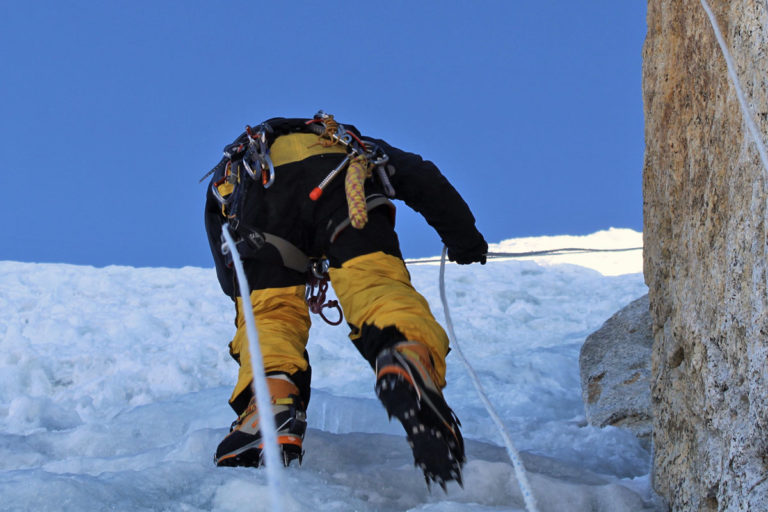
We ascend on the south-west ridge and reach the high camp. After setting up our camp, we participate on a basic climbing training. Our guides will provide training on peak climbing techniques and the proper ways of using climbing gears such as the ice axe, climbing boots and crampons, harness, ascender, etc. The training will also include using ropes to go up and down. Although it is not mandatory to have prior training for Pisang Peak climbing, we strongly believe that some training experience will boost your confidence and climbing skills to increase the chances of scaling the summit as well as to fully enjoy the experience. Overnight at Pisang Peak High Camp.

  • Climbing:
    3-4 hrs
Maximum Altitude
Maximum Altitude
5,400m/17,717ft
Lodging Level
Accommodation
Camping
Single Supplementary
Meals
Breakfast, Lunch and Dinner
9
Day 09
Summit Pisang Peak and back to base camp
Pisang Peak 6,091m / 19,985ft

We begin our trek early in the morning after breakfast. Today’s trail will be mostly on rocky surfaces. The peak is steep; therefore, there is not much snow. We will require around 20m of rope to climb on a ridge. Around the summit is around 70 degree of slope which will require the usage of around 200m rope. Both fixed rope and main rope will be used. The views of the Annapurna ranges and others are extraordinary from the summit. We return to the base camp for an overnight stay.

  • Climbing:
    8-9 hrs
Maximum Altitude
Maximum Altitude
6,091m/19,985ft
Lodging Level
Accommodation
Camping
Single Supplementary
Meals
Breakfast, Lunch and Dinner
10
Day 10
Contingency

This is a separate day reserved for any contingency. If we are not able to summit the Pisang Peak on the day as planned due to bad weather or any unforeseen event, this day can be used.

Lodging Level
Accommodation
Camping
Single Supplementary
Meals
Breakfast, Lunch and Dinner
11
Day 11
Pisang Peak Base Camp to Manang Valley
Manang 3,519m / 11,546ft

From the base camp of Pisang peak we trek towards Pisang village. From Pisang there are two routes to Manang. We choose the one which passes through Upper Pisang via Geru as it guarantees outstanding views of Mt. Annapurna, Pisang Peak, and others. As we walk near Manang the climate becomes more cold and dry. However, a short visit to Barge Monastery, the biggest monastery in the Manang District should cheer us up. Overnight at Manang.

  • Hiking:
    5-6 hrs
Maximum Altitude
Maximum Altitude
3,519m/11,546ft
Lodging Level
Accommodation
Hotel/Tea House
Single Supplementary
Meals
Breakfast, Lunch and Dinner
12
Day 12
Manang to Yak Kharka
Yak Kharka 4,110m / 13,485ft

From Manang village, the trail crosses a stream, climbs to the village of Tenki above Manang, and then continues to climb out of the Marshyangdi Valley turning northwest up the valley of Jarsang Khola. The trail follows this valley northward, passing a few pastures, a scrub of juniper trees, as it steadily gains elevation. The trail further passes near the small village of Ghunsa, a cluster of flat mud roofs just below the trailhead. Now the trail goes through meadows where horses and yaks graze. After crossing a small river on a wooden bridge, the trail passes an ancient old Mani wall in a pleasant meadow and then reaches another small village of Yak Kharka. Small but gradual ascent is the key to avoiding altitude problems.

  • Hiking:
    3-4 hrs
Maximum Altitude
Maximum Altitude
4,110m/13,485ft
Lodging Level
Accommodation
Hotel/Tea House
Single Supplementary
Meals
Breakfast, Lunch and Dinner
13
Day 13
Yak kharka to Thorang Phedi
Thorang Phedi 4,420m / 14,502ft

It is an uphill walk to Thorang Phedi. After walking for some time, we cross a suspension bridge and reach Ledar village. We ascend further and pass through towering cliffs before reaching Thorang Phedi, the last village before Thorong La.  On this trip we are rewarded with one of the best views of Mt. Gundang, Mt. Syagang, Thorung Peak and Mt. Khatungkan. Overnight in Thorang Phedi.

  • Hiking:
    3-4 hrs
Maximum Altitude
Maximum Altitude
4,420m/14,502ft
Lodging Level
Accommodation
Hotel/Tea House
Single Supplementary
Meals
Breakfast, Lunch and Dinner
14
Day 14
Thorang Phedi to Thorong La, continue trek to Muktinath
Thorong La Pass 5,416m / 17,770ft

Crossing Thorong La pass, one of the highest passes in the world will be our ultimate objective today. We will be crossing the pass from east to west (Manang to Muktinath) which is the easiest and safest direction. We get up around three in the morning and walk up the mountain. When we finally make it to the top, we realize that our journey was worth it. We can take a few photos before heading to Muktinath Valley at the foot of the Thorong La pass. We continue trekking to Muktinath which is an important place of pilgrimage for both Hindus and Buddhists. Overnight in Muktinath.

  • Hiking:
    9-10 hrs
Maximum Altitude
Maximum Altitude
5,416m/17,770ft
Lodging Level
Accommodation
Hotel/Tea House
Single Supplementary
Meals
Breakfast, Lunch and Dinner
15
Day 15
Muktinath to Jomsom
Jomsom 2,700m / 8,859ft

Muktinath is an important pilgrimage site for Buddhists and Hindus alike. In the morning, we tour the temple area and a Buddhist monastery located close to the temple. After the short tour, we continue our trek to Jomsom which is popular for its sweet apples and strong winds. In fact, there are even Nepalese songs that pay tribute to the strong gush of wind that blows in Jomsom around noon. After reaching Jomsom, we can visit its Ecological Museum that provides information on Jomsom’s rich culture as well as the flora and fauna that are native to the valley. Overnight in Jomsom.

  • Hiking:
    5-6 hrs
Maximum Altitude
Maximum Altitude
2,700m/8,859ft
Lodging Level
Accommodation
Hotel/Tea House
Single Supplementary
Meals
Breakfast, Lunch and Dinner
16
Day 16
Fly from Jomsom to Pokhara
Pokhara 827m / 2,713ft

Today we fly to Pokhara, the lake city in the earliest possible airplane. After checking-in at our hotel, we may take a rest or visit the lakeside area in the vicinity of the Fewa Lake. Here, we can indulge in buying some souvenirs or sampling some local delicacies. Overnight in Pokhara.

  • Flight:
    25 min
Maximum Altitude
Maximum Altitude
827m/2,713ft
Lodging Level
Accommodation
Hotel (Hotel Landmark)
Single Supplementary
Meals
Breakfast
17
Day 17
Drive from Pokhara to Kathmandu
Kathmandu 1,350m / 4,429ft

After breakfast, we say goodbye to the beautiful lake city of Pokhara and drive towards Kathmandu. After reaching Kathmandu we have the rest of the day off. There will also be a farewell dinner hosted by Himalayan Glacier in the evening to celebrate the successful completion of our journey.

  • Driving:
    6 hrs
Maximum Altitude
Maximum Altitude
1,350m/4,429ft
Lodging Level
Accommodation
Hotel (Hotel Moonlight)
Single Supplementary
Meals
Breakfast and Dinner
18
Day 18
Final departure

Our adventure in Nepal comes to an end today! A Himalayan Glacier representative will escort us to the airport approximately 3 hours before our scheduled flight. On our way home, we have plenty of time to plan our next adventure in the wonderful country of Nepal.

Single Supplementary
Meals
Breakfast

Included

  • Asset 147
    Accommodation in Standard Hotels on Twin Sharing Basis
  • Asset 58
    Equipment
  • Asset 68
    Domestic Flights
  • Local Guide & Support Staffs
  • Asset 42
    All Private Ground Transportation Including Airport Transfers
  • Meals in the Mountain
  • Asset 67
    Small-Group Adventure
  • Guaranteed Departures
  • Asset 63
    Lifetime Deposit
  • No Booking Fee

For Your Information, International flights aren’t included.  Rooms are usually shared by two people unless you request a private room. Also, you can upgrade to better hotels in the mountain and even in the cities. For your customized services, please specify during the booking process or contact our Destination & Products Specialist.

DATES & PRICES

All our published dates are guaranteed departures. If the dates don’t match with your travel plans, we are more than happy to create your desired date. Let us know what kind of trip you are looking for and our travel experts will help plan your tailor-made trips in your dream destination.

Dates

Arrival - Departure

Availability

Spaces

Price

Per Person (Twin share basis)
The tour is available upon request. Please contact us for information regarding dates and prices.

Proceed Booking

Frequently Asked Questions

Pisang Peak Climbing costs US $4,299 per person on a twin-share basis for the full 18-day itinerary, averaging around US $239 per day, and includes hotels, domestic flights, camping equipment, and a climbing guide, though international flights are excluded.

A single supplement of US $350 applies for a private room in Kathmandu and Pokhara, and Himalayan Glacier offers guaranteed departures with no booking fee.

Pisang Peak Climbing is rated Demanding to Challenging, combining multi-day high-altitude trekking with a technical summit day that involves fixed ropes, an ice axe, and crampons on a roughly 70-degree slope requiring around 200 meters of rope near the top.

Basic climbing training is provided at High Camp before the summit push, so prior technical mountaineering experience helps but is not mandatory.

The best time for Pisang Peak Climbing is spring (March to May) and autumn (September to November), when clear skies, stable weather, and minimal precipitation offer the safest conditions for both trekking through the Annapurna region and summiting the peak.

Spring brings blooming rhododendrons at lower elevations, while autumn typically offers the clearest mountain visibility of the year.

Pisang Peak Climbing takes 18 days from arrival in Kathmandu to final departure, including 2 preparation days, roughly 9 to 10 days of trekking and climbing between Dharapani and the summit, a built-in contingency day, and a return route via Thorong La Pass and Jomsom.

Total hiking and climbing time across the trip runs 39 to 47 hours, plus about 17 to 18 hours of driving.

Pisang Peak is considered one of Nepal’s more approachable trekking peaks and suits physically fit beginners with some trekking experience, since Himalayan Glacier provides basic climbing training at High Camp, though it is not fully beginner-friendly given its technical summit ridge and fixed-rope sections.

Trekkers with little prior climbing background often pair it with the classic Annapurna Circuit for a first taste of Himalayan mountaineering.

The maximum altitude on Pisang Peak Climbing is 6,091m (19,985ft) at the summit, reached on day 9 of the itinerary, with the trek also crossing Thorong La Pass at 5,416m (17,770ft) on the return route to Muktinath.

High Camp sits at 5,400m (17,717ft), the final stop before the summit push.

Pisang Peak Climbing requires an NMA (Nepal Mountaineering Association) trekking peak permit for Pisang Peak, an ACAP (Annapurna Conservation Area Permit) for the surrounding region, and a TIMS card, with fees varying by climbing season and typically arranged by Himalayan Glacier.

As a Group B trekking peak, Pisang Peak’s climbing permit fee generally runs lower than expedition peaks like Everest, though current exact rates should be confirmed at booking.

Solo climbing is not permitted on Pisang Peak, since Nepal’s regulations require a licensed climbing guide for all NMA-listed trekking peaks, and Himalayan Glacier provides an experienced climbing leader plus support staff throughout the trek and summit attempt.

A mandatory guide requirement also applies to the surrounding Annapurna Conservation Area trekking sections of the route.

Pisang Peak Climbing demands good cardiovascular fitness, multi-day trekking stamina, and comfort with exposure at altitude, since climbers spend a full day at High Camp practicing rope work, ice axe use, and crampon technique before attempting the technical summit ridge.

Prior high-altitude trekking or basic mountaineering experience is beneficial, though the on-trip training session is designed to prepare first-time climbers.

The biggest single-day challenge on Pisang Peak Climbing is the technical summit push itself, an 8 to 9 hour climb from High Camp up a steep ridge with roughly 70-degree slopes near the top, requiring around 200 meters of fixed rope, crampons, and an ice axe to reach 6,091m (19,985ft).

Climbers begin before dawn from High Camp at 5,400m (17,717ft) and rely on the basic climbing training provided the previous day to handle the exposed rock and ice sections safely.

Pisang Peak Climbing includes a dedicated acclimatization day in Upper Pisang at 3,700m (12,140ft) on day 6, allowing the body to adjust before continuing to progressively higher camps at Base Camp, High Camp, and the 6,091m (19,985ft) summit.

The itinerary also builds in gradual altitude gain and a contingency day near the summit to allow for weather or acclimatization delays.

Altitude sickness risk on Pisang Peak Climbing is significant, since the summit reaches 6,091m (19,985ft) and the route also crosses Thorong La Pass at 5,416m (17,770ft), so trekkers should expect symptoms like headaches or fatigue and follow a gradual ascent profile.

Read our full guide on Altitute Sickness in th Himalayas. Himalayan Glacier’s guides monitor climbers for signs of acute mountain sickness throughout the trekking and climbing sections.

Accommodation on Pisang Peak Climbing mixes hotels in Kathmandu and Pokhara, teahouses along the Annapurna trekking sections, and tented camping at Pisang Peak Base Camp and High Camp, with a 4-season sleeping bag and foam mattress provided during the climbing days.

Most teahouses have shared toilet facilities, and a single room supplement of US $350 is available for city hotel stays.

Compared to other Nepal trekking peaks like Mera Peak or Island Peak, Pisang Peak offers a shorter, more technical climb combined with classic Annapurna Circuit scenery and a Thorong La Pass crossing, making it a strong choice for climbers wanting variety in one trip.

Climbers seeking a higher, more remote summit without the Annapurna Circuit combination may prefer Mera Peak at 6,476m (21,246ft) instead.

WHAT OTHER TRAVELERS SAYS?

Free Trip Planning

Planning a Trip?

Get a free consultation from our travel experts with over a decade of experience. Schedule a call or chat with us on WhatsApp.

Login

Sign Up

After creating an account, you'll be able to track your payment status, track the confirmation and you can also rate the tour after you finished the tour.

After creating an account, you'll be able to track your payment status, track the confirmation and you can also rate the tour after you finished the tour.
Username*
Password*
Confirm Password*
First Name*
Last Name*
Birth Date*
Email*
Contact Number*
Nationality*
* Creating an account means you're okay with our Terms of Service and Privacy Statement.
Please agree to all the terms and conditions before proceeding to the next step

Already a member?

Login
+1 (410) 307-0007

Proceed Booking