Lhakpa Ri-20 Days
Mountain Background
The Lhakpa Ri is one of the most popular climbing peaks owing to easy accessibility as well as its proximity to world's highest mountain, the Everest. Hence, Lhakpa is also famous as the easier cousin of Mt. Everest. Relatively rapid accessibility, easier boarding to the Base Camp, favorable directions and lower gradient give Lhakpa Ri an advantages over other 7000 m! Besides summiting Lhakpa Ri, travelers also enjoy the magnificent company of Everest, Lhotse and Makalu among others. The mountain is also featured in Lucy Walker's famous experimental documentary, 'Blindsight: Himalayas - The Summit of Happiness'. The documentary features the fascinating adventure of six visually challenged ("blind") Tibetan teenagers who embark on their adventure to climb Lhakpa Ri under the guidance of blind educator and adventurer Sabriye Tenberken, and the famous blind climber Erik Weihenmayer.
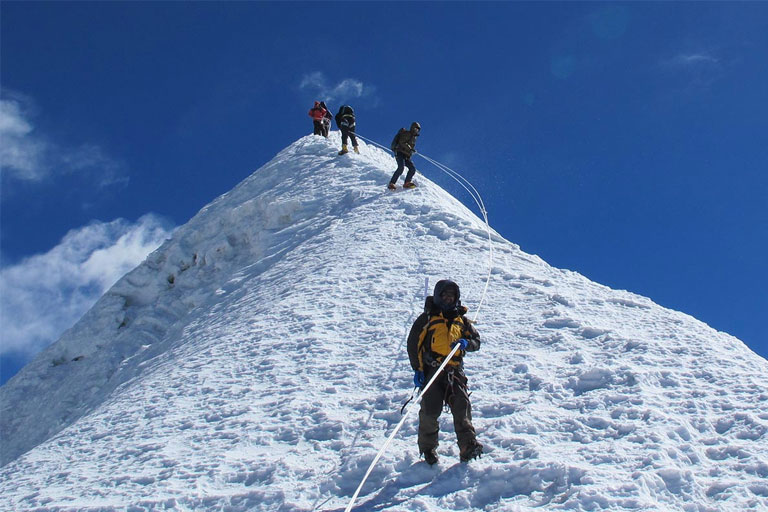
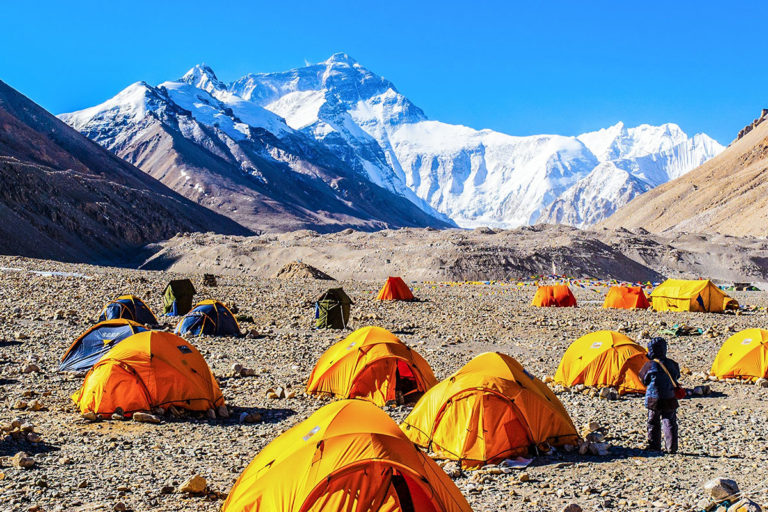
Our journey begins from Lhasa - our stay at the Tibet capital would serve both the purpose of acclimatization and cultural sightseeing. Then we drive to the Everest Base Camp via different Tibet towns and villages. From Everest Base Camp, we set out for our Lhakpa Ri Climbing adventure. We climb along the east Rongbuk glacier sheared in three stages to the Everest Advanced BaseCamp North, with intermediate Camps in between. Our initial trek along the flat glacial terrain soon leads to the steep north ridge. Whenever necessary, our position would be secured with fixed ropes. After summiting, we descent to Rongbuk and drive over the Tibet-Nepal border to Kathmandu.
We invite visitors to experience Himalayan Glacier's amazing package which focuses on adventure, fun, cultural exposure, and not the least, proper acclimatization.
Day to Day Expedition Itinerary
- Day 1: Arrive in Lhasa (3650 m/11972ft)
- Day 2: Sightseeing in Lhasa (3650 m/11972ft): Potala Palace/Sera Monastery
- Day 3: Sightseeing in Lhasa (3650 m/11972ft): Norbulingka, Jokhang Temple, Barkhor Bazar, Drepung Monastery
- Day 4:Transfer Lhasa — Gyantse — Shigatse (3,840m/12,590ft, 367km, 8-9 hours)
- Day 5: Morning sightseeing of Shigatse. Transfer to Shegar (4150m/13612ft, 274km)
- Day 6:Transfer Shegar – Rongbuk (5,000m/16,400ft)
- Day 7: At Everest Base Camp (5150m/16,892ft)
- Day 8:Trek from Everest Base Camp to Camp 1 (5460m/17,908ft): 3 hours
|
- Day 9:Trek to Interim camp (5760m/18,892ft)
- Day 10:Rest and Acclimatization day
- Day 11: Trek to Camp II (5970m/19,581ft): 6 hours
- Day 12: Trek to Camp III (6340m/20,795ft): 3 - 4 hours
- Day 13-14:Acclimatization at Camp III
- Day 15:Climb Lhakpa Ri(7045m/23,107ft)
- Day 16: Spare Day
- Day 17: Rest and Pack up day at the Base Camp
- Day 18:Drive to Zhangmu (2300m/7, 544ft): 245 km/4-5 hrs
- Day 19: Drive to Kathmandu (1350m/4428ft): 123 km/4-5 hrs
- Day 20: Farewell Friend
|
View Detail Itinerary »»
What's Included:
- Expedition permit fees
- Accommodations in Kathmandu/Lhasa
- All overnight accommodations while on the trek and climb
- Meals in Kathmandu/Lhasa and while trekking and climbing
- Group equipment for the climb
- Qualified and Experienced guides
- Experienced Climbing Sherpas
- High Altitude Climbing Sherpas
- Airport transfers
- Satellite phone service
- Oxygen (2 4-litre bottles)
What's Not Included:
- International airfare and Nepal Visa
- Personal equipments and extra services
- Tips and Bonus for Staff and guide
- Insurance and Trip cancellation
- Beverages
- Airport departure tax
Recommended Previous Experience:
This is a mountain expedition above 7,000 meter. Since walking through such snowy altitude is not an experience of having cup of tea with friends. It is all at very high ...
read more »»
Catering Arrangements:
Himalayan Glacier provides all camping equipment and gear, including tents, dining, toilet, and kitchen tents. At base camp, we will have a large mess tent equipped with ...read more »»
Visa and Travel Procedures
Traveling to Tibet is a dream of many. Since Himalayan Glacier would like to assist us in making our Tibet tour an adventure of a lifetime. Therefore, presented below is ...
read more »»
Acclimatization
We are climbing above 7,000 meter. Since such an elevation could cause medical conditions (Acute Mountain Sickness) which could be fatal. There is 40% less oxygen compared to sea level in high-altitudes ...
read more »»
Trekking Day
A typical trekking day starts at around 6 or 7 am. We enjoy the hearty breakfast and begin trekking. We carry our pack containing personal items we need for the day. The ...
read more »»
Climbing Day
The climbing itinerary may vary according to the our personal experience. A climbing day involves a steady climbing for 3-4 hours in the morning. After taking lunch, rest and relax, ...
read more »»
Weather Conditions:
The springtime from March to May and the Autumn months from September to November is considered the favorable weather for Lhakpa Ri climbing. However, the weather conditions in high mountains ...
read more »»
Leadership:
Himalayan Glacier's Lhakpa Ri expeditions are led by experienced and professional
mountaineers and
guides who have scaled the mountain several times ...
read more »»
Team Composition
Team composition is important to ensure safety and comfort of the climbers. Himalayan Glacier pays its high attention to the safety standards of the climbers. Hence for two International Climbers, Himalayan Glacier assigns its accredited climbing leader, high altitudes assistance Sherpa, and cook. For base camp assistance and other necessary trek, Himalayan Glacier comes with crews such as porters, yaks and yak man. Further, to maintain the high safety standard, Himalayan Glacier team members would be added as per the number of international climbers.
Equipments & Check List
While packing for Lhakpa Ri certain equipments are essential.
Please
Click here for this trip's comprehensive checklist.
Trip Start Dates
We will organize this trip on the dates requested by you. Please contact us for your customized departure date.
The spring season of March to May and the Autumn season of September to November are considered the best time for Lhakpa Ri expedition. The months of April and May and then again October and November are the classic climbing period. The summer months of monsoon rains and the winter months from December to February are considered to be the most unfavorable time for climbing.
Additional Information
Our website contains as much information as possible about this trip. However, if you wish to discuss any aspect of this trip or your suitability for it please
contact us.