


With a diverse range of travel experiences, the best places to visit in Peru depend on your individual interests. Whether you’re exploring the ancient ruins of the Inca Empire, discovering remarkable landscapes, relaxing on idyllic beaches, or enjoying vibrant nightlife, Peru has something for every type of traveler. Many visitors are drawn by the country’s rich history, culture, natural beauty, and adventure opportunities.
One of the top highlights of Peru is the ancient Incan city of Machu Picchu, a mysterious and breathtaking site featured on countless travel postcards. If you’re planning to hike in Peru, it’s essential to know the best time to visit to avoid uncomfortable weather. Machu Picchu experiences two main climate patterns: periods of heavy rain and stretches of bright, intense sun.
- Is Peru just more than Machu Picchu?
- 1. Machu Picchu – The Lost City of the Incas
- 2. The Inca Trail – A Legendary Trek to Machu Picchu
- 3. Cusco – The Ancient Inca Capital
- 4. Chachapoyas – The Hidden Gem of Northern Peru
- 5. Lake Titicaca – The Highest Navigable Lake in the World
- 6. Arequipa – The White City
- 7. Lima – Peru’s Culinary & Cultural Capital
- 8. Salkantay – An Epic Alternative to the Inca Trail
- 9. The Sacred Valley or The Urubamba Valley – The Heart of the Inca Empire
- 10. The Rainbow Mountain (Vinicunca) – A Natural Wonder
- Conclusion
Is Peru just more than Machu Picchu?
Many travelers to Peru overlook the country’s wide variety of tourist attractions, largely because Machu Picchu has long dominated the spotlight as the country’s most famous destination. However, no matter what type of traveler you are, Peru has something exciting to offer. In fact, the country is filled with unique places waiting to be explored, making it one of South America’s most popular travel destinations.
Furthermore, Peru has long been celebrated for its culinary diversity, esteemed for its rich cultural heritage, and revered for its remarkable biodiversity. A single visit to Peru will prove insufficient to appreciate its unparalleled beauty fully.
Herein lies a glimpse of the ten most spectacular destinations to explore in Peru:
1. Machu Picchu – The Lost City of the Incas

Without any second thoughts, Machu Picchu is certainly one of the best places to go in Peru. The city that is home to the iconic ruins of an Incan citadel can be reached either on a train ride or by hiking the Inca trail to Machu Picchu. This Peruvian highlight is also known as “the Lost City of the Incas”. Obviously, it is one of the top attractions in Peru.
It is, quite interestingly, believed that Machu Picchu has temples, private quarters, and ceremonial platforms that continue to radiate sacred energy. Now, ain’t that interesting? A 2-hour train-ride from Ollantaytambo (a town in the Sacred Valley) will take you to Machu Picchu. But, hikers wouldn’t quite be interested to hop in for a train-ride!
Highlight of Machu Picchu
- Home of Huayna Picchu, a majestic mountain situated to the north of Machu Picchu.
- The Guardhouse, the original entrance to Machu Picchu, is also known as the Caretaker’s Hut.
- Intihuatana Rock, sitting at the top of a large terraced pyramid, is believed to have been carved from one solid piece of granite and is situated near the Royal Plaza.
- Visit Sacred Plaza, home to three important buildings: The Main Temple, the Three Windowed Temple and the Priest’s House.
Why Visit Machu Picchu?
Machu Picchu is Peru’s crown jewel and one of the New Seven Wonders of the World. This 15th-century Inca citadel, perched high in the Andes, is a masterpiece of ancient engineering and spirituality.
How to Get There:
• By Train: A scenic 2-hour ride from Ollantaytambo (Sacred Valley) to Aguas Calientes, followed by a bus to the ruins.
• By Hiking: The famous Inca Trail (4-day trek) or alternative routes like the Salkantay Trek.
Best Time to Visit:
May-October (dry season). Avoid January-February (heavy rains).
2. The Inca Trail – A Legendary Trek to Machu Picchu
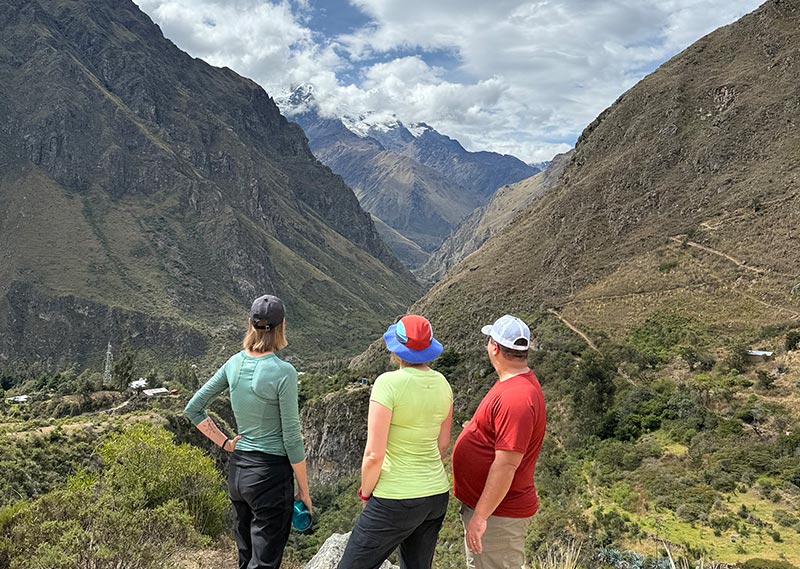
Most visitors consider the popular Inca trail, which terminates at Machu Picchu as the major highlight of their trip in Peru. The route meanders through diverse ecosystems and landscapes. With plunging valleys and towering mountains lying in the distance, some parts of the Inca trail run next to stepped- terraces, alpine tundra, and cloud forests.
The government of Peru has restricted the number of visitors on this trail to reduce human impact on the trail, as well as within the ancient city itself. It is possible to get a permit to the Inca trail only when you book a trip with a government certified travel agency. More to that, traveling solo in Peru is not possible as you need to be accompanied with a licensed guide.
Highlight of the Inca Trail
- Abra de Warmiwañusca or the Dead Woman’s Pass
- Runkurakay Ruins
- Inti Punku, the Sun Gate
- Machu Picchu Citadel
- Delicate Orchids on the mountainside
- Wayllambamba, the perfect spot to watch the sunset behind the dramatic Andean peaks
- The Valley of Llulluchcpampa, with picturesque landscape and perfect views of stunning snowcapped cliffs
- Sayacmarca, with abundant butterflies and hummingbirds
- Phuyupatamarca, the city above the clouds, which is a major archaeological site
- Huiñay Huayna (Wiñay Wayna), constructed on a steep hillside overlooking the Urubamba River
Why Visit the Inca Trail?
This 4-day trek is one of the world’s most famous hikes, passing through cloud forests, Inca ruins, and stunning mountain scenery before reaching Machu Picchu.
Key Stops Along the Trail:
- Dead Woman’s Pass (4,215m) – The highest point of the trek.
- Runkurakay Ruins – A small circular Inca checkpoint.
- Wiñay Wayna – A beautiful terraced site near Machu Picchu.
Permit Required: Only 500 permits per day (book 6+ months in advance).
Thinking of trekking the Inca Trail?
Walk in the footsteps of the Incas through cloud forests and stone-paved paths.
👉 Check Itinerary
3. Cusco – The Ancient Inca Capital
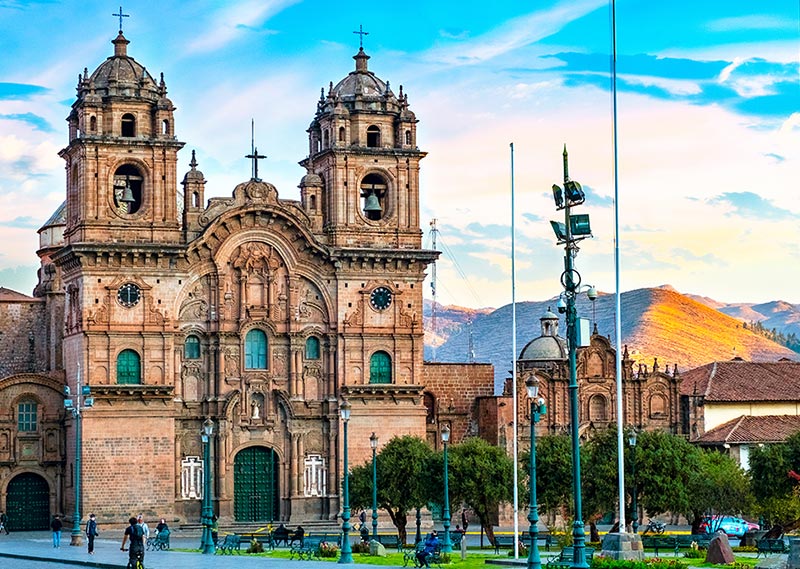
Sometimes spelt as “Cuzco”, it is a city in southeastern Peru near the Urubamba Valley of the Andean mountain range. 1983, Cusco was included in the list of UNESCO World Heritage Sites, with the title, ‘City of Cuzco’. Tourism has become the backbone of Peru’s national economy since the early 2000s. Cusco was once the capital of the Incan Empire. Nevertheless, today it holds the title of the archeological capital of the Americas.
There are many places to visit in Cusco, the Peruvian city lying amidst the mountains of Andes. It is one of Peru’s most-visited destinations offering easy access to Machu Picchu and the incredible Sacred Valley of the Incas.
Highlight of Cusco
- Sacsayhuaman, one of Cusco’s best Inca archeological attractions
- Cusco Cathedral, also known as Cathedral Basilica of the Virgin of the Assumption is the main temple of the Cusco City.
- Inca Museum, which houses a great collection of artefacts dating back to Inca and pre-Inca times.
- Historical Museum of Cusco, displaying archaeological pieces from Cusco and the Peruvian coast, and other important artwork and paintings from the Cusco School of Art.
- San Pedro Market, a very busy market with more street vendors and ladies in traditional dress selling nuts, popcorn, and other small bags of dried foods.
- Pisac, the Sunday farmer’s market where the villagers wear beautiful colorful clothing and ornate monteras (a dress worn by an Andean woman) decorated with intricate embroidery patterns.
- Choquequirao, a lost city in the west of Cusco is perched on a mountain spur, high above the Apurimac River
- Ollantaytambo, lying at the end of the valley was primarily built as a temple and royal retreat. It was also a mighty fortress.
Pro Tip: Spend 2-3 days in Cusco to acclimatize before hiking.
Why Visit Cusco?
Once the heart of the Inca Empire, Cusco is now a vibrant mix of colonial architecture, Inca ruins, and lively markets.
So, when are you planning to visit Peru?
No one can ever deny that Peru has always fascinated people for hundreds of years. Know the best time to visit Peru, and plan your holiday accordingly!
4. Chachapoyas – The Hidden Gem of Northern Peru
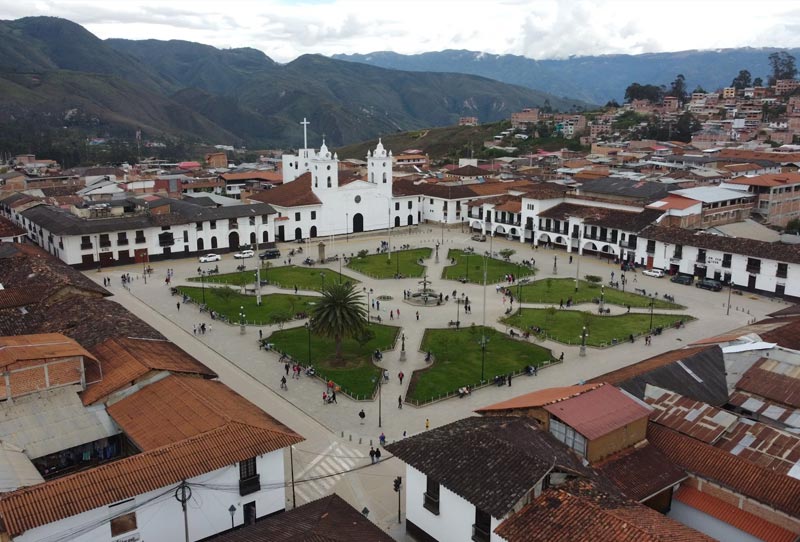
Far away from the Peruvian coast, Chachapoyas is set in a scenic, yet secluded spot, amid the mountains. It is the capital of the Amazonas. It is home to a couple of interesting monuments and colonial buildings. Natural beauty here is in abundance; with plenty of waterfalls. Hiking and trekking is popular because of the superb landscapes to explore in Chachapayos.
Chachapayos is undoubtedly one of the best places to visit in Peru due to its rich heritage. This town is a way to archeological sites that attract hundreds of tourists each year. This quaint town will provide you hiking opportunities, if you are an adventurous soul.
Highlight of Chachapayos
- Kuelap, a hill-top fortress with 65-foot high walls, has attracted increase in interest from archeologists and historians.
- Leymeybamba, home to Leymeybamba Museum, it is about 25 miles south of Chachapayos. It was merely built to house more than 200 mummies salvaged in 1997.
- Gocta Waterfalls, with lush green forest clinging to the rocks as if they were coming straight out of a Jurassic Park movie.
- Yumbilla Waterfalls, makes for a nice hiking trip. Hiking through lush cloud forest is beautiful, while you pass two other smaller falls: Cristal and Medio Cerro.
- Karajia, known for the larger-than-life sized sarcophagi, standing upright up to 8 feet.
- Revash, near San Bartolo village, is a funerary complex built high into limestone cliffs.
Why Visit Chachapoyas ?
This off-the-beaten-path destination is home to Kuelap Fortress (the “Machu Picchu of the North”) and breathtaking waterfalls.
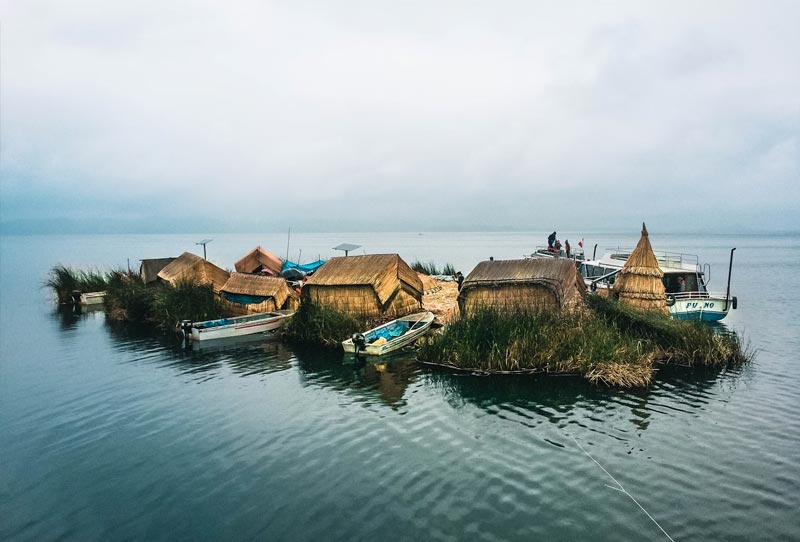
The rolling hills and traditional small settlements surrounds the sparkling blue waters of Lake Titicaca. Nestled between Peru and Bolivia, it is incidentally also the highest navigable water body in the world. One of the best places to visit in Peru is situated here at Lake Titicaca, i.e. the man-made Uros Islands. Interestingly, it is one of the largest lakes in South America.
Lake Titicaca is located in such a way that the western part lies within the Puno Region of Peru. And likewise, the eastern side is located in the Bolivian La Paz Department. Five major river systems feed into the lake. Titicaca has 41 islands, some of which are densely populated.
Highlight of Lake Titicaca
- Uros Island, also known as the Floating Island are man-made islands out of reeds.
- Taquile Island, locally known as Isla Taquile, is a fascinating island on the Peruvian side of the lake.
- Island of the Sun, or Isla Del Sol is the largest island on Lake Titicaca, and best reached from Copacabana, on the Bolivian side of the lake.
- Puno Town Center, especially known for the Puno Cathedral.
- Amantani Island or Isla Amantani is close to Taquile Island, wherein the elderly people control tourism.
- Island of the Moon (on the Bolivian side), or Isla de la Luna is a tiny island with mythological significance to the Incas.
Why Visit Lake Titicaca?
Straddling Peru and Bolivia, this lake is famous for its floating Uros Islands (made of reeds) and indigenous cultures.
Best Experiences:
✔ Stay with locals on Taquile or Amantani Island.
✔ Visit the Isla del Sol (Bolivia side) – A sacred Inca site.
6. Arequipa – The White City

Arequipa is popularly known to be Peru’s White City owing to its unique structure built from volcanic rock (sillar). It is indeed one of the most visually spectacular cites of Peru. Beyond the architecture of the colonial-era is a deep-hued treasure of the city’s past, i.e. The Monastery of Santa Clara. Set against a backdrop of snow-capped mountains, the City Center at Arequipa is a designated UNESCO World Heritage Site. Arequipa is also the second-largest city of Peru.
Arequipa is frequently a stop-point for travelers wishing to visit Colca Canyon, which is almost a 4-hour drive from the city.
Highlight of Arequipa
- Arequipa Cathedral, the largest and most important church that stretches on the entire length of Plaza de Armas.
- El Misti, the ominous volcano towering over the city, especially suitable for serious adventure seekers.
- Colca Canyon, the obvious answer to USA’s Grand Canyon. With breathtaking scenery, it is one of the deepest canyons in the world.
- Yanahuara, a city with a wide-ranging mix of colonial-era churches and elegant archways with remarkable views of the majestic ice-capped volcanoes.
- Monasterio de Santa Catalina¸ a town within a town, which is filled with chapels, bedrooms, and cooking quarters.
- Iglesia de la Compania, a beautifully carved façade of the elegant Jesuit church located on the opposite corner of Plaza de Armas.
Why Visit Arequipa ?
Known for its volcanic stone architecture, Arequipa is a UNESCO-listed city near the Colca Canyon (one of the world’s deepest canyons).
7. Lima – Peru’s Culinary & Cultural Capital

Travelers will get an opportunity to visit some of the best places in Lima, the capital city of Peru. Due to its location close to the coast, Lima is definitely a great foodie destination, especially for seafood lovers. Barranco is considered to be the coolest district in the capital city of Lima. The capital’s Historic Center is a UNESCO World Heritage Site. Peru’s bustling capital city with colonial buildings, museums, bars create a lively ambience. Being the capital city of Peru. Lima is an expansive urban sprawl of almost 9 million people.
In Lima, travelers will find modern hotels divergent with old-style and colonial design and organized shantytowns alongside frantic nightclubs and bars. Many local artists reside in or have studios in Barranco.
Highlight of Lima
- Torre Tagle Palace, a building built with a perfect blend of several architectural styles.
- Plaza de Armas, also known as the Floating Island are man-made islands out of reeds.
- Barranco, has long been popular with artists and writers.
- The private Museo de Arte Colonial Pedro de Osma is housed in the historic mansion Palacio de Osma.
- Huaca Pucllana, a pyramid-shaped temple in the heart of Miraflores is surrounded by buildings.
- Miraflores district, is one of the most scenic neighborhoods of Lima.
- Santo Domingo, the church and monastery here is one of the oldest and historic landmark in Lima.
- Lima Cathedral, the original cathedral being destroyed several time by earthquake, the current cathedral represents architectural styles from baroque to neoclassic.
- Las Nazarenas, within several blocks east of the Plaza de Armas, this church has a unique history.
Why Visit Lima?
Lima is a food lover’s paradise, home to world-class restaurants (like Central & Maido) and historic landmarks.
8. Salkantay – An Epic Alternative to the Inca Trail
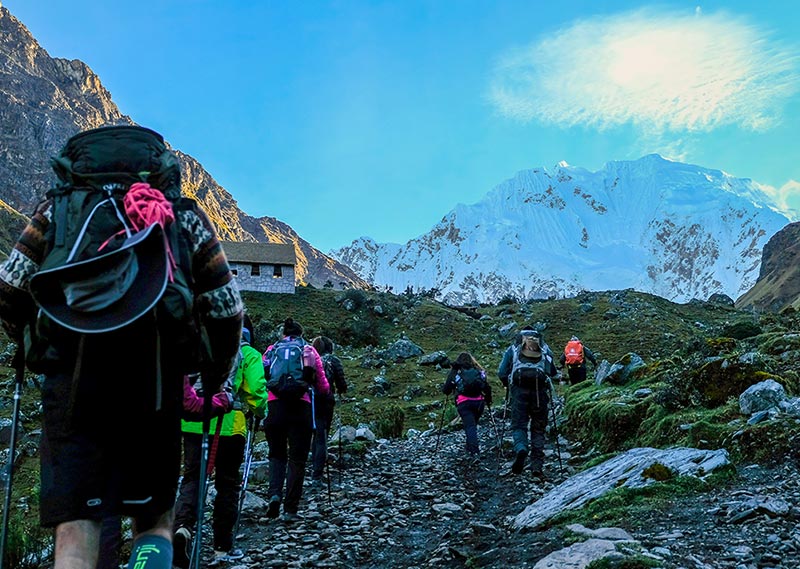
Located in the Cusco Region, Salkantay (or Salcantay) is the highest peak in the Vilcabamba mountain range. It is the 38th highest peak in the Andes, and the 12th highest in Peru. Being close to Machu Pichu, makes Salkantay an alternate trekking trail in comparison to the popular Inca Trail. According to history, the Incas associated the Machu Picchu and Salkantay trail alignment with concepts of rain and fertility. It is also considered that Salkantay is one of the principle deities controlling weather and fertility in the region west of Cusco.
There isn’t any doubt that Salkantay came into limelight just because of its trekking trail. The Salkantay trek is named among best 25 treks in the world by National Geography Adventures Travel Magazine. So, if Salkantay is on your bucket-list, trekking is the best thing to do in Salkantay.
Highlight of Salkantay
- Stunning views of the Andean mountain range from Vilcabamba to Salkantay.
- Natural bridges, snow-capped mountains, cascades, wildlife, and cloud forest.
- Humantay Lagoon, the incredible turquoise-water lagoon surrounded by the Humantay and Salkantay Peaks.
- Llactapata Inca Ruins provides an amazing view of Machu Picchu.
- Cocalmayo Hot Springs are natural thermal baths where you can relax and recover your sore muscles after a long hiking day.
- Machu Picchu is the ultimate highlight of this trek, making it a perfect ending for your adventure.
Why Visit Salkantay?
This 5-day trek oaffers glacial peaks, cloud forests, and a quieter route to Machu Picchu.
Ready to trek across two legendary trails?
Hike through remote beauty and ancient history in one seamless trek, a combined route offering the best of both adventure and history.
Check out the Salkantay Trek itinerary
9. The Sacred Valley or The Urubamba Valley – The Heart of the Inca Empire
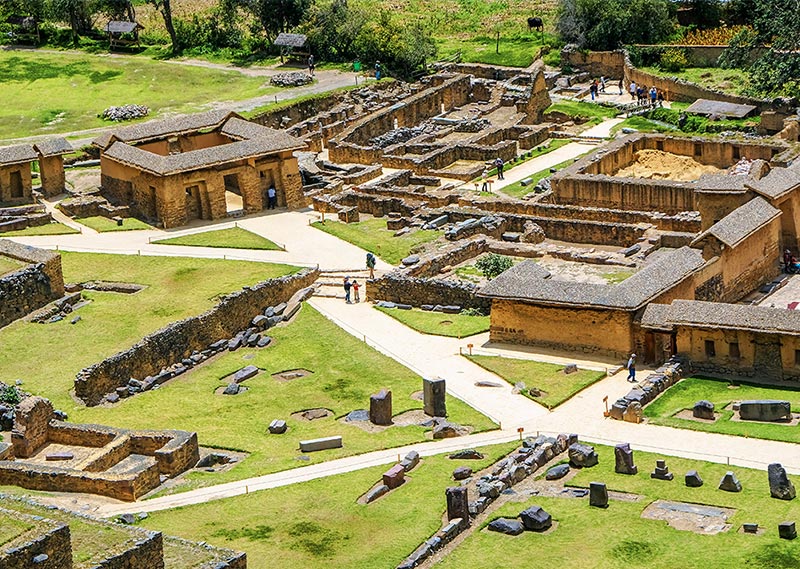
Valle Sagrado, as it is known in Peru, it the heart of the Inca Empire and the gateway to Macha Picchu. There are elegant regal towns, secluded villages, vibrant markets, and intriguing Incan sites like the citadels of Pisac, Chinchero, and Ollantaytambo built-in along this mysterious route. To the northwest of the sacred valley is Urubamba, which is a hub for adventure tourism such as rock-climbing, down-hill biking, and trekking.
The Sacred valley of the Incas is located at 2,800m (9,186ft.) above sea level. It has one of the best climates in the highland region. Being slightly lower than Cusco in altitude, it is a great place for hikers to acclimatize before their trip. The rainy season lasts from December to March with mostly rains and sometimes a burst of bright sunshine. Likewise, the dry season lasts from April to November where the weather can be cloudy, but is mostly sunny.
Highlight of the Sacred Valley
- Pisac Ruins, the ruins of the fortress are stunningly beautiful. An exceptional part of the Pisac ruins is the Temple of the Sun.
- Ollantaytambo, end of the Sacred Valley. It is arguably one of the most beautiful towns in Peru.
- Chincheros, a small Andean Village in the Sacred Valley. From here, one can get beautiful views of the Cordillera Vilcabamba and Salkantay peak.
- Aguas Calientes, the nearest town to Machu Picchu located down in the valley beside the Vilcanota or Urubamba River.
- Moray Ruins, the visually stunning Inca ruins lies in a remote area of the Sacred Valley.
- Salineras, within a short distance from Moray, are salt mines. Only a few tourists visit this exciting site.
- Pisac Market, a place to do a little shopping for local arts and crafts. Pisac is now also a spiritual center of the Sacred Valley.
Why Visit Sacred Valley?
This fertile valley near Cusco is packed with Inca ruins, markets, and adventure sports.
10. The Rainbow Mountain (Vinicunca) – A Natural Wonder

Originally known as Vinicunca, and also known as Montaña de Siete Colores, the Rainbow Mountain is a mountain in the Andes with an altitude of 5,200 meters (17,100 feet) above sea level. A peculiar feature of the Rainbow Mountain attracted thousands of tourists back in the year 2010. The mountain’s series of stripes of various colors made the mountain look like a rainbow. The seven colors of the mountain and due to its mineralogical composition.
Highlight of Rainbow Mountain
- The colorful terrain, largely due to weather and mineralogy.
- Daily worship and offerings, the locals go to the mountain believing the mountain to be the deity of Cusco.
- Trekking to Rainbow Mountain, there are lots of options to choose from 1-day to 8-day trekking route.
- The Snow Star Festival is a special event in the mountain where travelers can witness dancers in multi-layered skirts and musician with drums and flutes performing traditional tunes.
How to Get There:
- A 2-hour drive from Cusco along with a 3-mile hike, or
- A 3-and-a-half-hour drive through Pitumarca, and hardly half a mile steep walk to the hill (may take 1 to 1 and half hour).
Why Visit The Rainbow Mountain?
This striped mountain (5,200m) is one of Peru’s most Instagrammable spots.
Looking for something beyond the ordinary?
Discover Machu Picchu and Rainbow Mountain in one enriching experience. Explore Itinerary
Conclusion
From the ancient mysteries of Machu Picchu to the vibrant colors of Rainbow Mountain, Peru offers a remarkable blend of history, nature, and culture that captures the heart of every traveler. Each destination on this list tells its own story—whether it’s the colonial charm of Cusco, the lush biodiversity of the Amazon rainforest, or the desert adventures of Huacachina.
Whether you’re an adventure seeker, wildlife enthusiast, or someone looking to immerse yourself in rich traditions, Peru delivers unforgettable experiences at every turn. With such diversity packed into one country, your journey through Peru is sure to be nothing short of extraordinary.
Ready to plan a memorable trip to Peru?
From the mystique of Machu Picchu to the vibrant culture of Cusco and the surreal beauty of the Sacred Valley, plan a seamless trip tailored to your pace and preferences with us.

A leading adventure & tour operator in the Himalayas since 1992, Himalayan Glacier Adventure & Travel Company® is the #1 guiding adventure travel company on Mount Everest Base Camp and beyond with 98% success rate. Each of our holidays is truly a tailor-made package which we design for all ages, groups, families & solo travelers.

