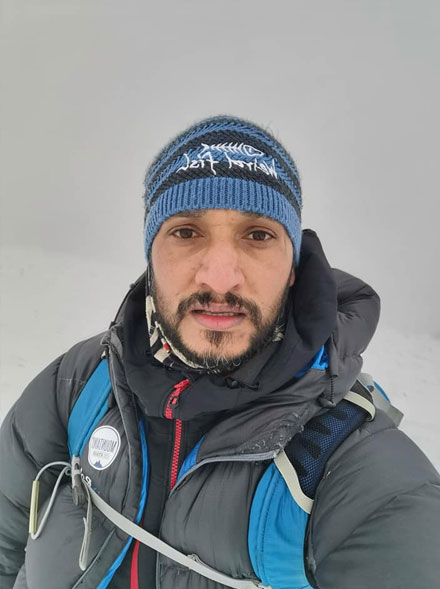
Woman Trekking Guide Leads The Way in Nepal

May 17, 2012

Started Ten Years Ago

A decade ago in when Saraswati Biswakarma first began plying her trade as a trekking guide she was met with some considerable resistance from her male counterparts. They would quite often remind her that she was taking a job which was considered male only territory. The 28-year-old guide explains, ”’You’ve snatched our job’, they would shout when I walked up the mountains with over 10kg on my back.”

One of the few Females to Climb Annapurna IV

In a profession which has always been the domain of Nepalese men, Biswakarma is one of the first females to undertake this kind of work – and she remains one of the few women in Nepal who have been able to take up work as a trekking guide. As part of this process she has had to face some very stern physical tests and to date she is one of just a handful of women to have climbed Annapurna IV. This ascent is considered by most to be one of the hardest challenges in Nepal.

Uphill Struggle

For Biswakarma the battle to rise to the top of her profession has been an uphill struggle in more ways than one. This was not just the case for her personally, but also a challenge for her family as well. She explains, “When I first started, my family was under a lot of pressure from my relatives and neighbours to make me quit.”

Social Stigma

The social stigma for her was not just due to the fact that she was doing what was socially considered as ‘man’s work’ but also due to the fact that her work involved her coming into contact with people from across the globe. Biswakarma elaborates, “Women who work and travel with foreigners are often seen as those who have tainted characters.” With a certain degree of understatement she adds. “It wasn’t easy for me to continue.”

Family Support

Ironically it was through the support of male members of her own family that she gained the support which gave her the strength to carry on through the tests and pursue the career she has now fashioned for herself. In particular she looks to the help she received from her uncle and her father, who themselves were trekking guides, as the reasons that she managed to gain a strong foothold in the profession.

Trekking With Sisters

Biswakarma has gained a home with women like herself guiding since 1998. Himalayan Glacier has plans to adopt this challenge and end the traditional view, held by many locals in Nepal, that trekking is a solely male profession, and helping women like Biswakarma to access this kind of work.

Need for Female Guides

The need for female guides is something that has widely been perceived from visitors for some time. In particular this has been highlighted on treks or expeditions by female tourists who sometimes (although it is rare) are uncomfortable with the male guides. This point is underlined by the founder of the company, Lucky Chettri, who noted this fact back in the late 1990’s when she came up with the plan for the business. She explains, “I was operating a tourist lodge in the late 90s in Pokhara, when two young foreigner women who had just returned from a trek told me they had been sexually harassed by their drunk guides.” It was at that point, when she realised how vulnerable women were while trekking on their own, that she could do something to help. She added, “They were helpless and actually wept, and that immediately got me thinking about how we could cooperate.”

Establishing the Trekking Agency

Following this incident she established her trekking agency which offered their services to female tourists. There were many logical aspects to the situation which all seemed to come together and support the proposals. For tourists visiting the region they will spend some considerable time in preparation and weigh up a huge range of options involved in the visit. They will measure everything from discussing the risks involved and explaining the importance of comparing life insurance and making sure that dangerous activities are covered by the specific policy selected to the best offers on hiking kit. Why not then also include a consideration of gender in terms of the people that are employed to support their trip.

Benefits Outweigh the Negatives

For Biswakarma there are some obvious problems posed by gender when it comes to practicing the profession, but as far as she is concerned these are far outweighed by the benefits. She says, “The worst time to be trekking is when you’re having your period, as you have a backache and it’s not convenient to change, but when people appreciate the fact that you’re rubbing shoulders with men, walking the wild, much of that tiredness just disappears.”

Mt Everest among 10 stunning travel destinations around the world

March 30, 2012

The pride of Nepal, Mount Everest, has been enlisted in Forbes’ Ten Stunning Travel Destinations around the world.

On the border of Tibet and Nepal, the highest mountain peak in the world (26,035 feet) has been defined by Forbes as nature’s most magnificent creation.

“Certainly it is the raison d’etre in the climbing world,” writes Beth Greenfield of Forbes who has named Bordeaux in France, Tuscany in Italy, Petra in Jordan, Torres del Paine National Park in South America, Rio de Janeiro in Brazil, Midway Island in the United States, Fire Island in New York, Plain of Temples, in Myanmar and Okavango Delta in Botswana as the other nine stunning travel destinations around the world.

Trekking Everest Base Camp Trek

Trekking Everest Base Camp Trek

Greenfield‘s discovery of places ranges from remote natural wonders to glittering cities.

Greenfield has even translated the Tibetan word for Everest Chomolungma, as ‘Mother of the Universe,’ and the Nepalese Sagarmatha as ‘Goddess of the Sky.’

Nepal on high: Himalayas trekking tips

October 16, 2011

Magnificent snow-peaked summits and quaint thousand-year-old villages provide the backdrop for an unforgettable adventure in Nepal. Exploring the dramatic landscape on foot is nothing short of extraordinary, trekkers say.

“[One night] the back doors were open towards the view of Mount Everest and the other peaks of the Himalayas. It was so beautiful with snow-capped mountains and the sky was full of stars. I think that was one of the most magical moments I’ve ever had,” says iReporter Kuna Rajandran, who trekked to Everest base camp in April.

Planning a Nepal expedition may seem daunting at first — and you will be challenged — but in the end, it’s worth it. You will come away with some of the greatest memories of your life, from savoring locally cooked meals at teahouses to soaking in breathtaking views of the high Himalayas, according to adventurers who’ve made the trip.

There are endless options when it comes to planning a trek in Nepal. One of the most popular routes is the Annapurna Circuit, which loops around the base of the Annapurna range. And, of course, the more difficult Everest base camp trek is a magnet for many visitors.

Worlds away in Kathmandu

Experts urge travelers to be wary of individual porters and guides who approach you on the streets of Kathmandu. They are most likely uninsured, cautions Mohan Lamsal, general secretary of Trekking Agencies’ Association of Nepal (TAAN). Have a detailed discussion with your chosen trekking company to assess their professionalism, Lamsal advises.

While booking in advance is a sure thing, some adventurous iReporters say making arrangements in Kathmandu is a convenient way to cut out the middleman.

-source:CNN.com

Be careful not to overestimate your abilities. Even if you feel completely comfortable with the people and the landscape and think you can make the trek on your own — don’t. Trekking with at least one companion is a must, especially if you’re a beginner, experienced trekkers say.

Since both the Annapurna base camp and Everest Base camp treks are located in conservation areas, you will need permits, said iReporter Barry Wenlock, a Kathmandu resident and an experienced Himalayan trekker who has been leading tours since 1995. You can get permits before you begin or upon entry into the parks. Additionally, every trekker needs a Trekkers’ Information Management System (TIMS) pass. You or your trip organizer can get this card, which is part of a database that stores visitor information for safety reasons.

When deciding on when to make your trek, there is generally one rule of thumb: Avoid the monsoon season (June through August). The most popular times to trek are late spring (March and April) and early to mid-fall (October and November), but keep in mind that is also when the trekking routes are busiest. To beat the rush, try going a week or two earlier or later, suggests Wenlock.

“There are such beautiful forests [at the foothills of the Annapurna], and it’s Nepal’s primary rhododendron forest, so if you visit there in the last week of March, first week of April, the rhododendrons are full and it’s an absolutely staggeringly beautiful place. And the pink and red rhododendrons all up the hillside, a few magnolias mixed in, some jasmine,” Wenlock says.

Before heading to Nepal, it’s important not only to prepare your itinerary, but also your body. Even the mild or “Nepali Flat” parts of the “easier” Annapurna trek have their fair share of steep inclines.

“Walking around the golf course isn’t enough — you really need to do uphill walking. You can do that for a few weeks before you come, that will make it much easier,” Wenlock says.

It’s cold in Nepal — really cold. Weather-appropriate supplies are a must for any trekker, novice or expert. Remember to pack your warmest down jacket and broken-in hiking boots as well as sun and eye protection.

Based on his experience trekking the Annapurna Circuit in 2009, iReporter Dean Gakos, an avid hiker, recommends watching out for knock-off gear, like fake North Face jackets, which he saw in Kathmandu. You don’t want to climb up into the mountains only to realize your jacket contains synthetic down.

If you’re planning on trekking up to higher altitudes, be cautious of altitude sickness. Warning signs include vomiting and weakness of the body, says Rajandran.

iReporter Udayan Mishra, a Kathmandu resident who has been on several expeditions in Nepal, suggests taking the trek gradually to acclimatize yourself — overexertion in the beginning may lead to problems later on.

Make sure you have enough Nepalese currency before you get on the path. Gakos recalls that there was “one ATM on the whole trek.” And even if there is an ATM, there’s no guarantee that it has been recently stocked with money.

There are two typical types of treks: the more popular teahouse trekking and a fully organized camping trip. A teahouse trek gives you the comfort of knowing that lodging and food will be provided. You can carry additional supplies — clothing, snacks, sleeping bag — on your own or hire a porter to carry it for you.

Once you finish walking, five to six hours on average per day, you settle down in a village. If you don’t have a guide to recommend a teahouse, talk to other travelers and consult guidebooks for suggestions. In teahouses that provide lodging and food, guests are expected to eat at least two meals: dinner at night and breakfast the next morning, Gakos says.

Don’t expect a hotel experience — expect better. Nepali locals are known for being extremely kind and hospitable. Wenlock says you’ll be treated like family during your stay. Gakos was looking for that kind of personal exchange.

‘”That’s why] we picked Annapurna, it was the perfect balance of wilderness and viewing the high Himalayas while also getting the Nepali culture,” Gakos says.

Past visitors consistently praise trekking in Nepal as one of the best experiences of their lives. CNN iReporter Ruth Stewart, who trekked to the Everest Base Camp in winter 2010, says Nepal was the most beautiful part of the world she’s ever been to.

Take advantage of the majestic mountains and the pristine landscape. Unlike many other mountain ranges, the Himalayan area in Nepal is practically untouched.

“There’s no rubbish, there’s no gondolas going up to the highest view, there’s no cars, there’s no traffic — it’s just complete serenity and it’s just the most incredible experience,” Stewart said.

Mount Everest Trekking 20 to 30th april

June 19, 2011

This was a tough challenge, after 2 weeks of competing and training in Abu Dhabi, along with flights and of course the serious altitude. The trek lasted 10 days and an altitude of 4500 m was reached.

Everest Base Camp Trek

Everest Base Camp Trek

Dr. Paul Morrow’s Everest Base Camp Trekking

April 21, 2011

April 17, 2011: Arrival in Kathmandu
Welcome to Nepal! Paul arrived on 15th and was picked up by Himalayan Glacier Trekking staff. He was then transferred to Hotel Shanker for a good night’s sleep. He will be heading to Everest Base Camp trekking tomorrow with seven other fellow trekkers – 2 Australians, 2 New Zealanders, 2 from South Africans, and 1 American. The trekking guide leading the group is Mr. Suresh Pandey, along with two assistant guides and four porters. The group will meet in the HGT office this afternoon for trip briefing, etc., Tomorrow Paul and the rest of the group will fly to Lukla from Kathmandu. The flight time is 6:15 am which means they will have to be at the airport around 5:15 am.

Everest Base Camp

Everest Base Camp

April 18, 2011: Kathmandu-Lukla and trek to Phakding
After early breakfast, Paul got transferred to airport for his early flight to Lukla. He flew to Lukla at the scheduled time. Upon reaching Lukla, rest of the crew members met him. After some baggage management, Paul started the trek right away with other companions. Weather was little cloudy late morning, however toward noon the weather was fine again. Took lunch enroute. For acclimatization purpose, the trek today is short and he reached Phakding early afternoon. Rest of the day Paul will spend around Phakding, a popular typical Sherpa Village.

Everest Base Camp Trek

Everest Base Camp Trek

April 19, 2011: Phakding to Namche Bazzar
Today also, Paul along with other co-trekkers was ready after breakfast for day’s trek. As per the guide’s suggestion, he took meds-Diamox as an effort to avoid any potential altitude sickness. Of course others also did the same. Started the trek, the route was not really steepy until Jorsale. After the lunch break at Jorsale, he continued. Weather was partly cloudy with some light rain too for some time, the group was not stopped by rain, they continued. The route was more tough after the lunch, its harsh steep towards Namche Bazzar from Jorsale. Although the weather was still cloudy and some rain, Paul and his friends were able to see some of gorgeous mountains like Kusum Khangru, Thamserku, etc., so typically the clouds were unable to hide the mountains from the trekkers’ sight. Finally, arrived Namche at 3:15, –a long breath of relief. Paul with his friends were little wet so preferred light snack and hot tea before taking good shower. They are resting now at the lodges while I am updating this here.

Everest Base Camp Trek

Everest Base Camp Trek

April 20, 2011: Namche Bazzar-rest and acclimatization day
Today is the scheduled rest day at Namche Bazzar. Although today is rest day, Paul would not rest whole day in lodge. Rest or acclimatization day is not meant to rest at all, one should be active and try to go to little high altitude too if possible because it is meant for acclimatization. Thus, whole group after the breakfast were on the way for the trip around Namche Bazzar. Due to last day’s rain, the weather was fantastic in the morning, sunny. The group marched to Syangboche airstrip and the Khumjung village. They also visited the museum in Namche. They also visited Edmund Hillary School, took photos. The mountains were visible clearly, Thamserku, Kusum Khangru, Kongde, Khumbila, etc. Took lunch in Khumjung. Later in the afternoon, it was little cloudy. Still some peaks were visible. Two friends of Paul said they were experiencing some headache today. The experienced guide guessed may be because it is due to they took aspirin and Diamox together. He suggested them not to take aspirin with Diamox but rather paracetamol would be fine. Later, they said they were feeling better. After the excursion, they returned to the nice lodge again, the group were appreciating the lodge Himalayan Glacier Trekking was using for its clients in Namche.

Everest Base Camp Trek

Everest Base Camp Trek

April 21, 2011: Namche Bazzar to Tengboche
Started early today after breakfast at Hotel Namche. The weather was really fantastic. Walked slowly up towards today’s destination -Tengboche. The snow-clad mountain scene was amazing in the clean weather. Mt. Lhotse, Lhotse Sar, Everest , Ama Dablam, Thamserku, Kusum Khangru all looked glorious. Lunch was taken at nice lodge amid the forest of Phortse Tenga. The clouds now started to cover the sky trying to hide the mountain views, but still some mountains were visible. In mountains, generally the morning weather is clear and good and towards afternoon the weather becomes cloudy and windy. Some hours of walk took Paul and friends to today’s lodge camp at Tengboche. After brief rest, visited Tengboche monastery. After dinner around 6 pm, Mr. Suresh briefed on next day’s program before the group went to bed.

Everest Base Camp

Everest Base Camp

April 22, 2011: Tengboche to Pangboche
As always, wake up tea was served in Paul’s room as well as to others’ too. After finishing the tea and freshening up the group assembled at the dinning hall for breakfast after which they started today’s trek. Before starting the group also watched the beautiful mountain scenery from the Tengboche Monastery. The scenery that sunrise made snowy mountains glister was unbelievably gorgeous. Saying goodbye to Tengboche and its monastery, group moved ahead. Lunch was taken at the small village of Shomare. Ahead after 3 hours’ trek Paul and his friends reached the guesthouse at Pangboche. And same as other days, they had tea and snack at the final camp and some went around Pangboche village while some preferred to rest. However, all were very well until today.

Dr. Paul’s Blog: http://paulsmteveresttrekk.blogspot.com/

Everest Without the Crowds

April 11, 2011

PERCHED on a narrow platform 17,500 feet above sea level, we paused to snack on boiled potatoes and the spicy Tibetan dumplings called momos, and to drink in the view.

We were at the top of the Renjo La, the pass that is the lowest point along a knife-edged ridge separating two valleys. Behind us, looming above a turquoise glacial lake, was Mount Everest. In front of us, an immense stone staircase led down into a valley dotted with roofless stone shelters and the occasional yak — a ribbon of green hemmed in by the soaring gray and white of Himalayan rock and ice.

Everest Base Camp Trek

Everest Base Camp Trek

Stunned into silence by the panorama, we descended the staircase and hiked on in a reverie. It wasn’t until we reached the banks of a fast-flowing river a few hours later that we noticed that the landscape no longer corresponded to the lines and dots on our map. We’d hiked for five hours without seeing another living soul, and, perhaps in part because of our solitude, somewhere along the way had taken a wrong turn.

More than 30,000 hikers venture into Nepal’s Everest region each year. Most make a beeline from the airstrip at Lukla to the tattered, wind-swept Everest base camp and straight back. That main trail has developed a quasi-suburban feel: you’re seldom out of sight of fellow trekkers, much less the never-ending stream of mule trains and Nepali porters with wicker baskets strapped to their foreheads. Cookie-cutter lodges and teahouses, not to mention reggae bars and Internet cafes, line the route. Read more

The 10 best treks in the world

February 14, 2011

These 10 classic treks are for serious walkers. All of them require a sturdy pair of lungs, fit legs and a good amount of preparation. However, if you choose to go on any of these trails then you will be rewarded with experiences that last a lifetime. In no particular order:

1. GR20, France

GR20, France

GR20, France - Image by Jean-Baptiste Bellet

This demanding 15- day (168km, 104mi) slog through Corsica is legendary for the diversity of landscapes it traverses. There are forests, granite moonscapes, windswept craters, glacial lakes, torrents, peat bogs, maquis, snow-capped peaks, plains and névés (stretches of ice formed from snow). But it doesn’t come easy: the path is rocky and sometimes steep, and includes rickety bridges and slippery rock faces – all part of the fun. Created in 1972, the GR20 links Calenzana, in the Balagne, with Conca, north of Porto Vecchio.

2. Inca Trail, Peru

Inca Trail, Peru

Inca Trail, Peru - Image by funkz

This 33km (20mi) ancient trail was laid by the Incas and is currently traversed by thousands each year. The trail leads from the Sacred Valley to Machu Picchu winding its way up and down and around the mountains, taking three high passes en route. Views of white-tipped mountains and high cloud forest combine with the magic of walking from one cliff-hugging ruin to the next – understandably making this South America’s most famous trail.

3. Pays Dogon, Mali

Pays Dogon, Mali

Pays Dogon, Mali - Image by Crazy Joe Devola

‘The land of the Dogon people’ is one of Africa’s most breathtaking regions. A trek here can last anywhere between two and 10 days, and takes in the soaring cliffs of the Bandiagara escarpment inlaid with old abandoned cliff dwellings. Dogon villages dot the cliffs and are an extraordinary highlight of the journey. The Dogon are known for their masked stilt dancers, intricately carved doors and pueblo-like dwellings built into the side of the escarpment.

4. Everest Base Camp, Nepal

Everest base Camp, Nepal

Everest base Camp, Nepal - Image by lampertron

Reaching a height of 5,545m (18,193ft) at Kala Pattar, this three-week trek is extremely popular with those who want to be able to say, ‘I’ve been to the base of the world’s highest mountain’. The difficult trek passes undeniably spectacular scenery and is trafficked by Sherpa people of the Solu Khumbu. The heights reached during this trek are literally dizzying until you acclimatise to the altitude, and the continuous cutting across valleys certainly has its ups and downs.

(Himalayan Glacier Trekking offers Everest Base Camp Trek – 14 days , Everest Base Camp Trek – 19 days, Everest Base Camp Trek via Gokyo Lakes – 17 days, Jiri to Everest Base Camp Trek – 21 days )

5. Indian Himalayas, India

Indian Himalayas, India

Indian Himalayas, India - Image by Chandramohan Burly V

Fewer folk trek on the Indian side of the world’s greatest mountain range. So, if isolation’s your thing try trekking in Himachal Pradesh. Hardcore hikers can try teetering along the mountain tops for 24 days from Spiti to Ladakh. This extremely remote and challenging walk follows ancient trade routes. The bleak high-altitude desert terrain inspired Rudyard Kipling to exclaim, ‘Surely the gods live here; this is no place for men’.

6. Overland Track, Australia

Overland Track, Australia

Overland Track, Australia - Image by brewbooks

Tasmania’s prehistoriclooking wilderness is most accessible on the 80km (50mi, five- to six-day) Overland Track. Snaking its way between Cradle Mountain and Lake St Clair (Australia’s deepest natural freshwater lake), the well-defined path (boardwalked in parts) passes craggy mountains, beautiful lakes and tarns, extensive forests and moorlands. Those who want more can take numerous side walks leading to waterfalls, valleys and still more summits including Mt Ossa (1,617m, 5,305ft) – Tassie’s highest.

7. Routeburn Track, New Zealand

Routeburn Track, New Zealand

Routeburn Track, New Zealand - Image by kiwinz

See the stunning subalpine scenery of New Zealand’s South Island surrounding this medium three-day (32km, 20mi) track. At the base of New Zealand’s Southern Alps, the track passes through two national parks: Fiordland and Mt Aspiring. Highlights include the views from Harris Saddle and atop Conical Hill – from where you can see waves breaking on the distant beach. The main challenge for this popular hike is actually securing a place among the limited numbers who are allowed on the track at any time.

8. The Narrows, USA

The Narrows, USA

The Narrows, USA - Image by Adam Belles

A 26km (16mi) journey through dramatic canyons carved over centuries by the Virgin River, the Narrows in Zion National Park is a hike like no other. The route is the river, with over half of the hike spent wading and sometimes swimming. The hike can be traversed in a day, though some choose to take the hanging gardens and natural springs at a more leisurely pace – spending a night at one of the park’s 12 camp grounds.

9. The Haute Route, France-Switzerland

The Haute Route, France-Switzerland

The Haute Route, France-Switzerland - Image by perry_maurice

Leading from Chamonix in France through the southern Valais to Zermatt in Switzerland, the Haute Route traverses some of the highest and most scenic country accessible to walkers anywhere in the Alps. The summer Haute Route walk (which takes a different course than the more famous winter skitouring route) takes around two weeks to complete. It mainly involves ‘pass hopping’ and demands a high level of fitness, with every section containing a high huff factor.

10. Baltoro Glacier & K2, Pakistan

Baltoro Glacier & K2, Pakistan

Baltoro Glacier & K2, Pakistan - Image by mariachily

This corridor of ice leads to the colossal peak of K2 (8,611m, 28,251ft), the world’s second-highest peak. This incomparable trek traverses some of the most humbling scenery on the planet. What begins following icy rivers boldly goes to the guts of the glacier before leading to the granite pyramidal mountains including Paiju (6,610m, 21,686ft), Uli Biaho (6,417m, 21,053ft), Great Trango Tower (6,286m, 20,623ft) and ultimately K2. If the 15 days doesn’t floor you, take side trips to more moraine-covered glaciers.

( Source : Lonely Planet)

EXPERIENCE KAILASH – MANSAROVAR YATRA 2011

December 30, 2010

kailash trip cost


Mount Kailash Journey 2011

Mount Kailash Journey 2011


Our Journey continues in 2011 with several departure dates. Please join us in celebrating life at the “roof of the world” where the solitude, clean air, and spiritually is at its peak. We will truly appreciate the life of peace and meditation in the Himalayas! Visit our website for more details: www.kailash.himalayanglacier.com

2011 Departure Dates (15 days Itinerary)

2011 Departure Dates (15 days Itinerary)


Lina Patel
Cell: 513-257-6700
Email: linapatel@fuse.net

Next Page »